


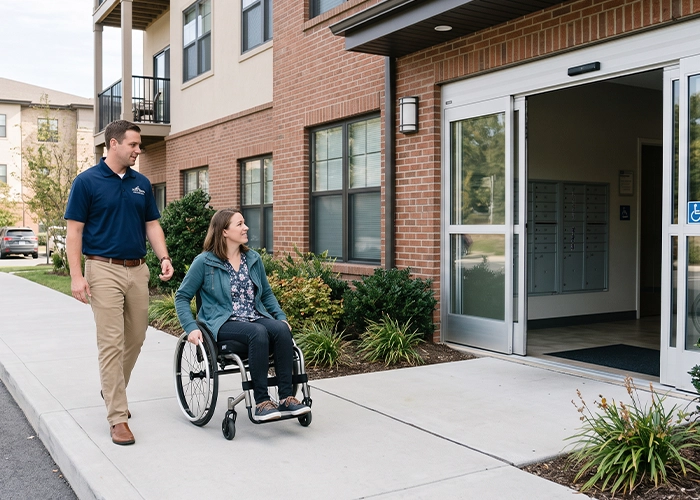
Accessibility laws help ensure that people with disabilities have an equal chance to find and enjoy suitable housing. Yet, understanding the ADA requirements for rental units can be difficult because several federal, state, and local laws may apply to the same property.
In this article:
Understanding ADA Requirements
Landlords must know which rules cover their buildings and how to respond to requests from tenants. A basic understanding can help prevent disputes, reduce legal risk, and create a better rental experience.
The Americans with Disabilities Act, or ADA, is a federal civil rights law that protects people with disabilities from discrimination. However, the ADA does not apply to every part of every residential rental property.
In most private apartment buildings, the ADA mainly covers areas that are open to the public. These areas may include a rental office, public parking spaces, or a leasing center. The law may require an accessible route, suitable parking, accessible doors, and other features that allow people with disabilities to use these spaces.
The Fair Housing Act often has a greater effect on the residential units themselves. Section 504 of the Rehabilitation Act may also apply when a property receives federal financial assistance. Since several laws can overlap, landlords should avoid treating the ADA as the only source of accessibility rules.
When the ADA Applies to Rental Properties
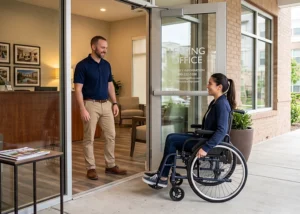
The ADA usually applies when part of a rental property operates as a public accommodation. A leasing office that serves prospective renters is a common example because members of the public are invited to enter and use its services.
Depending on the property, ADA-covered areas may include:
- Leasing and management offices
- Public entrances and walkways
- Parking spaces serving the leasing office
- Restrooms open to prospective tenants
- Model units used for public tours
- Retail stores located within a mixed-use property
Public housing operated by a state or local government may fall under Title II of the ADA. Private businesses and public accommodations are generally covered by Title III.
A private apartment unit is not automatically subject to the ADA simply because it is offered for rent. Still, the unit may be covered by the Fair Housing Act, Section 504, state law, local building codes, or a combination of these rules.
How the Fair Housing Act Protects Renters
The Fair Housing Act prohibits housing discrimination based on disability and other protected characteristics. It generally applies to most housing in the United States, although certain limited exemptions exist.
Housing providers may not refuse to rent to someone because of a disability. They also may not impose different lease terms, charge a higher security deposit, or steer the person toward a certain building or floor for that reason.
Landlords must also consider reasonable accommodation and modification requests. These duties can apply even when an older unit was not designed with modern accessibility features.
Reasonable Accommodations vs. Reasonable Modifications

The terms “reasonable accommodation” and “reasonable modification” sound similar, but they refer to different types of requests. Understanding the difference helps a landlord respond properly.
Reasonable Accommodations
A reasonable accommodation is a change to a rule, policy, practice, or service. The change gives a person with a disability an equal opportunity to use and enjoy the home.
Common examples include:
- Allowing an assistance animal despite a no-pet policy
- Assigning an accessible parking space near the tenant’s unit
- Accepting rent through a different payment method when needed
- Providing notices in a format the tenant can access
- Allowing a live-in aide when the accommodation is necessary
Housing providers generally may not charge an extra fee or deposit for an approved accommodation. For example, an assistance animal is not treated as a pet, so a pet fee should not be charged for it.
Reasonable Modifications
A reasonable modification is a physical change to a dwelling or common area. It may include installing grab bars, adding a ramp, lowering a countertop, or widening a doorway.
In many private rental properties, the tenant is responsible for the cost of the modification. A landlord may also require the work to be completed properly and, in certain cases, may request that the unit be restored when the tenant moves out.
Different rules can apply to federally assisted housing. Under Section 504, the housing provider may be responsible for paying for a necessary modification unless doing so would cause an undue financial and administrative burden.
Accessibility Rules for New Multifamily Housing
The Fair Housing Act includes design and construction requirements for certain multifamily properties. These standards generally apply to covered buildings designed and constructed for first occupancy after March 13, 1991.
Covered multifamily housing usually includes buildings with four or more units. If the building has an elevator, every unit must meet the applicable design requirements. In a building without an elevator, the ground-floor units are generally covered.
The law identifies seven main design requirements:
- An accessible building entrance on an accessible route
- Accessible public and common-use areas
- Doors wide enough for wheelchair access
- An accessible route into and through each covered unit
- Accessible light switches, outlets, thermostats, and controls
- Reinforced bathroom walls for the later installation of grab bars
- Kitchens and bathrooms designed for wheelchair maneuvering
These requirements are meant to make housing usable or easy to adapt. They do not always require every unit to have the same features as a fully accessible unit designed for a specific resident.
Handling an Accessibility Request

A tenant does not need to use a special form or cite a federal law to ask for an accommodation. A request may be made verbally or in writing. It only needs to make the landlord aware that a change may be needed because of a disability.
Landlords should use a consistent process:
- Document the request. Record when it was received and what the tenant asked for.
- Review the connection. Determine whether the request relates to the person’s disability.
- Request limited information when allowed. If the disability or need is not obvious, the landlord may seek reliable information that confirms the disability-related need.
- Consider the request promptly. An unnecessary delay can sometimes amount to a denial.
- Discuss alternatives when needed. If the original request cannot be approved, an effective alternative may be found through an open discussion.
- Provide a written response. Keep a record of the decision and any agreed-upon steps.
Landlords should not request full medical records or demand details about a person’s diagnosis when that information is not necessary. Any disability-related information received should be kept confidential.
When a Request May Be Denied
Not every request must be approved. A landlord may deny a requested accommodation if it would create an undue financial and administrative burden or fundamentally change the nature of the housing provider’s operations.
A modification may also be rejected if it poses a genuine safety concern or does not comply with building codes. However, general assumptions about disabilities are not enough to support a denial.
Before rejecting a request, the landlord should consider whether another option could meet the tenant’s needs. A practical alternative can often solve the problem without placing an unreasonable burden on either party.
Common Accessibility Mistakes to Avoid
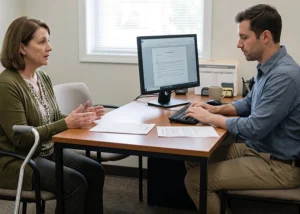
Problems often begin when a landlord responds too quickly or relies on an informal policy. Even a policy that applies to every tenant can be discriminatory if a reasonable exception is needed for a person with a disability.
Landlords and property managers should avoid:
- Assuming older properties are exempt from every accessibility law
- Charging pet fees for assistance animals
- Ignoring verbal requests because no form was submitted
- Asking for unnecessary medical information
- Delaying responses without a valid reason
- Refusing modifications without discussing possible alternatives
- Advertising a property as inaccessible without reviewing its features
- Applying accessibility rules differently from one tenant to another
State and local laws may provide broader protection than federal law. Building codes can also require features beyond the federal minimum, so a local review is often needed before construction or renovation begins.
Make Accessibility Part of the Rental Experience
Following rental property accessibility requirements is about more than checking boxes.
Clear policies, prompt responses, and respectful communication help protect tenants while reducing risk for property owners.
The right property manager can make renting easier from day one. Find a trusted management team for your property through Rental Choice’s directory.
This article provides general information and is not legal advice. Property owners should consult a qualified attorney and local building officials about requirements that apply to a specific property.
Related Articles:
 Company