


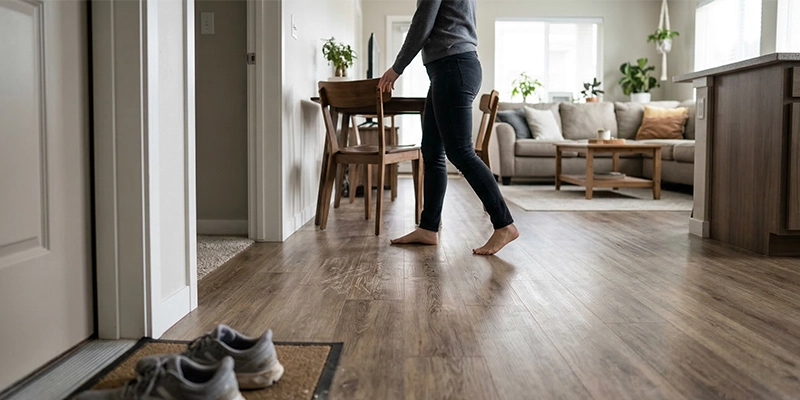
Many landlords search for low-maintenance flooring for rental properties hoping it will reduce repairs, tenant complaints, and replacement costs. The idea sounds simple: install a floor that requires little care and forget about it for years.
The reality is a bit more complicated. Some materials marketed as “low-maintenance” do not actually hold up well under the constant wear and turnover that rental properties experience.
In this article:
The Low-Maintenance Flooring for Rental Properties Myth

The phrase low-maintenance flooring for rental properties gets used frequently in renovation guides and real estate advice. While it sounds appealing, it can sometimes create unrealistic expectations for property owners.
A floor might require minimal cleaning, but that does not mean it will resist scratches, stains, moisture, or heavy foot traffic. Rental homes often experience higher wear than owner-occupied homes because tenants move furniture more frequently, pets may be present, and turnover periods bring additional activity.
Property managers quickly learn that the most important factor is not how little maintenance a floor needs. What really matters is how well the material holds up over time. Durable materials often outperform so-called low-maintenance options when it comes to long-term costs.
Why Flooring Matters in Rental Properties
Flooring is one of the most visible parts of a rental unit. It affects the property’s appearance, perceived value, and tenant satisfaction.
When flooring deteriorates quickly, landlords face multiple issues at once. The unit may look worn or outdated, tenants may report damage, and turnover repairs can delay the next lease.
Good flooring choices also impact operating costs. Durable floors reduce replacement frequency and minimize maintenance calls. Property managers often focus on flooring upgrades because they directly influence both rental appeal and long-term property value.
In many cases, investing in stronger materials upfront saves money over time.
What Makes Flooring Durable in Rental Units
Durability in rental flooring depends on several factors. A material must handle everyday traffic, accidental spills, furniture movement, and routine cleaning without significant damage.
The following characteristics usually indicate flooring that performs well in rental properties:
- Scratch resistance – Important in units where tenants may have pets or move furniture.
- Moisture resistance – Critical for kitchens, bathrooms, and entryways.
- Easy repairs – Some floors allow damaged pieces to be replaced without removing the entire surface.
- Long life span – Materials that last longer reduce turnover costs.
Property managers often evaluate flooring based on how it performs across multiple lease cycles. A floor that looks good after five tenants is usually more valuable than one that needs replacement every few years.
Flooring Options That Often Work Best in Rentals
Not every flooring material performs equally in rental properties. Some surfaces that look attractive in showrooms struggle under daily wear.
Below are several flooring types that tend to hold up well in rental environments.
Luxury Vinyl Plank
Luxury vinyl plank has become one of the most popular flooring choices for rental properties in recent years. It offers the appearance of hardwood while providing better resistance to moisture and scratches.
This material also performs well during tenant turnover. Individual planks can often be replaced without removing the entire floor, which helps reduce repair costs.
Another advantage is installation flexibility. Many vinyl plank systems use click-lock installation, allowing faster replacement when necessary.
Tile Flooring
Tile remains one of the most durable flooring materials available. It handles moisture well and can last for decades when installed correctly.
Because of its durability, tile is commonly used in kitchens, bathrooms, and laundry areas. It resists stains and scratches better than many other flooring types.
However, tile installation can be more expensive. Property owners should also consider grout maintenance, which may require occasional cleaning or sealing.
Laminate Flooring
Laminate flooring offers a balance between durability and cost. Modern laminate products often include protective wear layers that help resist scratches and scuffs.
Laminate also provides a wide range of design options. Property owners can choose finishes that resemble hardwood or stone without the higher cost.
While laminate handles foot traffic well, it can be vulnerable to water damage. For that reason, it may work best in living areas and bedrooms rather than moisture-heavy rooms.
Engineered Hardwood
Engineered hardwood gives rental units a high-end look while offering better stability than traditional hardwood.
The layered construction helps resist warping caused by humidity changes. This makes it more reliable in different climates.
Still, engineered hardwood requires careful consideration. It is more expensive than vinyl or laminate, and deep scratches may be harder to repair.
Flooring Materials That Can Cause Problems
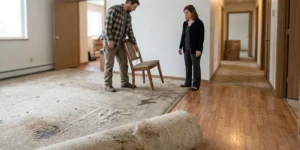
Some flooring options appear attractive at first but often create challenges for landlords.
Carpet
Carpet used to be the default flooring choice in many rental properties. Today, many property managers avoid it due to maintenance concerns.
Carpet tends to absorb stains, odors, and pet hair. Even with regular cleaning, it can wear down quickly in high-traffic areas.
Turnover costs also increase with carpet. Many landlords find themselves replacing it every few years, especially in busy rental units.
Soft Hardwood
Traditional hardwood floors may look beautiful, but softer species can scratch easily. Tenants moving furniture or having pets may cause visible damage.
Repairing hardwood also tends to be expensive. Refinishing floors requires time, labor, and temporary vacancy.
Because of these challenges, many property owners choose alternatives that mimic the look of wood while providing better durability.
Maintenance Still Matters
Even the most durable flooring requires regular care. Property managers should establish simple maintenance expectations for tenants.
Basic maintenance practices include:
- Routine cleaning to remove dirt and debris
- Prompt cleanup of spills
- Using furniture pads to reduce scratches
- Following manufacturer cleaning guidelines
Providing tenants with clear instructions can help extend the life of flooring materials. Some property managers include flooring care guidelines in their lease agreements or move-in documents.
Preventive maintenance also helps avoid larger repairs down the road.
Balancing Cost, Durability, and Appearance
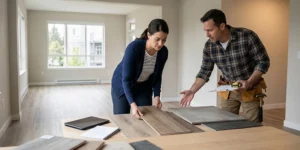
Choosing flooring for a rental property often involves balancing several priorities. Owners want materials that look appealing but also perform well over time.
Budget naturally plays a role in these decisions. While cheaper materials may reduce upfront costs, they often require replacement sooner.
Property managers frequently evaluate flooring based on three main factors:
- Initial installation cost
- Expected lifespan
- Maintenance requirements
When these factors are considered together, the most affordable option is not always the least expensive long term.
Durable flooring that lasts through several tenants may ultimately save money by reducing repair costs and minimizing vacancy periods.
How Property Managers Approach Flooring Decisions
Experienced property managers take a practical approach when selecting flooring. Instead of focusing solely on appearance or marketing claims, they consider how materials perform in real rental situations.
Several strategies commonly guide their decisions:
- Standardizing flooring across multiple units to simplify repairs and replacements.
- Choosing materials with readily available replacements in case of damage.
- Avoiding overly delicate finishes that require specialized care.
These strategies allow property managers to streamline maintenance and control renovation costs across an entire portfolio.
Maintenance planning also plays a major role in successful rental operations. Property managers often oversee repairs, inspections, and routine upkeep to ensure properties remain in good condition for tenants.
The Truth About “Low-Maintenance” Flooring
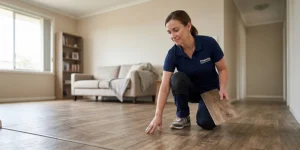
The idea of completely maintenance-free flooring is largely unrealistic. Every material requires some level of care and eventual replacement.
What truly benefits rental property owners is choosing flooring that can withstand real-world conditions. Durability, repairability, and lifespan tend to matter more than marketing labels.
A thoughtful flooring choice can reduce headaches for both landlords and tenants. When the right material is installed, it helps maintain property value and keeps rental units looking clean and appealing.
Choosing Flooring That Actually Lasts
The best flooring for rental properties is not always the one marketed as low maintenance. Instead, it is the material that balances durability, cost, and long-term performance.
If you are planning upgrades or managing multiple properties, consider working with professionals who understand how flooring choices impact rental performance. Check out our online directory to find one today!
Related Articles
 Company