

11 Reasons To Hire A Rental Property Management Company

Managing a rental property can be challenging, especially if you lack the time or skills for the job. This is where rental property management companies come in. But, what does a property manager do anyway?


What Is Rental Property Management?

The definition is in the name itself — rental property management. Simply put, it is the management of rental properties, be it residential or commercial. It involves the overseeing and performance of day-to-day tasks, usually by a rental property manager, to ensure smooth operation.

What do rental property managers do? Specifically, rental property managers are in charge of marketing your rental property, finding and screening tenants, collecting rent, and overseeing various maintenance and repairs. Their property management duties and responsibilities can also include tenant retention and ensuring compliance with the law.

Many people wonder whether there is a difference between property management and rental property management. The two are essentially the same thing, which means you can use the terms interchangeably.


The Benefits of Hiring a Rental Property Management Company

Commercial and residential property management is no easy feat. If you own a rental property, consider the following reasons to hire a rental management company:


1. Manage All Your Properties

Is it hard to manage a rental property? If you only have one rental property to think about, it is definitely possible to manage it on your own. But, as your real estate assets grow, it will become increasingly difficult to keep up with the demands of rental property management. After all, how many rental properties can one person manage?

The beauty of hiring a rental manager or company is that you don’t need to divide your time between all your rental properties. Companies have the resources required to stay on top of all the daily tasks without suffering burnout. If you try to juggle multiple rental properties by yourself, you will almost certainly feel exhausted — and that doesn’t even factor in your full-time job and personal life.


2. Quickly Fill Vacancies With Quality Tenants

One of the hardest aspects of managing a rental property is finding good tenants to fill vacancies. Rental management companies can help with that, too.

These companies can create a compelling online listing for your property and find tenants fast. They will also be the ones to screen your tenants to make sure you get high-quality renters. Property management companies have dealt with countless applications, so they know how to identify red flags and false information. With their help, you will have a tenant that never misses the deadline for rent and consistently takes care of the property in no time.


3. Higher Tenant Retention Rate

property management companyA low tenant turnover rate means fewer costs and headaches associated with the turnover process. That includes changing the locks, repainting the walls, exhaustive cleaning, and the like. You also don’t need to go through the entire process of finding and screening tenants all over again. Plus, when you have a great tenant, you naturally want to keep them from moving out.

As a landlord, you want to minimize turnover and improve your tenant retention rate. A rental property management company can do that for you. Such companies usually have retention tactics that keep tenants happy and satisfied with their accommodations.


4. Set the Right Rental Rate

How do you know whether or not you’re charging the right amount of rent? Although researching the average cost of rent in your neighborhood is a good place to start, property management companies have more thorough ways of setting the right rental rate. They usually conduct in-depth market studies that allow you to charge the highest rate possible without sacrificing your vacancy rate.


5. Collect Rent With Ease

Does a property manager collect rent? Yes, property managers and companies do handle rent and all the issues related to it. Apart from setting the right rental rate, rental property management companies also collect rent on your behalf.

By making use of their services, you can save yourself the trouble of constantly following up with your tenant about the rent. Though, if you already got their help, to begin with, you probably already have a quality tenant that pays rent on time.


6. Cost-Effective Maintenance

How much does it cost to have a rental property managed? Although professionals do charge a fee (usually 8 to 12 percent of the monthly rent), the cost is certainly worth it when you factor in how much time and money you’ll save on other tasks. One such task is property maintenance.

As a landlord, you must protect your investment and keep your tenants satisfied by performing regular maintenance and repairs. This type of work, though, can cost a lot of money. Instead of hiring different vendors for each service, you can take advantage of a property management firm’s in-house maintenance staff. This is much cheaper compared to managing maintenance yourself.


7. Access to Trusted Vendors

Some property management services don’t have in-house maintenance personnel, but that doesn’t mean they’re any less good. Most companies have a wide network of tried-and-tested, licensed, and insured contractors. These preferred vendors can give you cheaper rates while simultaneously performing quality work. Who knows? You might even get discounts and freebies.


8. Deal With Legal Issues

property management companyThere are a lot of federal and state laws to keep in mind when you’re handling a rental property, such as Fair Housing laws and Landlord-Tenant laws. Such laws cover several areas of rental management, such as tenant screening, property conditions, lease agreements and addendums, lease terminations, evictions, and even rent collection. One misstep (or perceived misstep) can land you in hot water.

With the help of professional rental management services, though, you have someone who can navigate the rental process while avoiding legal problems. Hire a property management company to ensure compliance with federal, state, and local laws.


9. Help With Taxes

Tax season is always troublesome, but a property management company can make it more bearable. These companies have a better understanding of tax laws, which means they can tell you which expenses are tax-deductible and which ones aren’t. They can also help you with the necessary forms and supporting documents for those claims. Even the fees property management companies charge can be written off from your taxes.


10. Avoid Management Headaches

How do you manage a rental property? There are so many moving parts and tasks associated with rental property management that it can feel overwhelming. It can even take a toll on your physical and mental health. Everything from tenant screening and rent collection to dealing with legal issues and taxes can weigh on you.

A professional service, though, has the necessary resources and rental property management software to make the process smoother. Plus, you don’t need to hire employees or balance management tasks with your personal life. It’s also a good idea to turn to a property management company if you have a regular 9-to-5 job, live far away from your rental property, or are just not interested in property management.


11. Reap Personal Benefits

Let’s face it — rental property management demands your time, attention, and effort. If you have none of these to spare, then a rental management company is your only choice. With professional help, you can look forward to less stress and more freedom. You’re also free to invest in other properties that don’t necessarily need to be near one another. Considering all these benefits, the property management company fees will surely be worth it.


The Final Decision

Should I use a property management company for my rental? As a rental property owner, you want to make the most out of your investment. A good way to do that is to hire a rental property management company that can perform related tasks effectively and efficiently.

Start your search for the best property management companies in your area with the help of Rental Choice. Our online directory makes it easy for you to find and choose a company worth your time.


RELATED ARTICLES:


20 Questions To Ask Property Managers Before Hiring Them

Entrusting your rental space to a property manager is a major decision. However, this can be the help you need to get the best return on your investment. Before signing a contract, though, here are the most important questions to ask a property manager or a property management company.


Questions to Ask Property Managers: Establishing Qualifications

In this first section, we’ll dive into important questions to ask a property manager when it comes to establishing their qualifications.


1. Do You Have a License for Property Management?

When hiring a property manager, it’s important to check if he or she is licensed. A license means that the property manager has the skills and qualifications to perform essential duties.

In most states, property managers are required to have a real estate broker license. This is because they also perform real estate activities such as advertising, showing, and leasing properties, as well as collecting rent. Meanwhile, Washington, D.C., Montana, South Carolina, and South Dakota require a property management license.

Even if your state does not require a real estate or property management license, it’s better to choose someone who has the right credentials. Check if your property manager candidate has certifications from organizations like the National Property Management Association (NPMA) and the National Association of Residential Property Managers (NARPM). With these qualifications, you can be confident about the skills and abilities of your property manager.


2. How Many Years of Property Management Experience Do You Have?

A license alone is not proof of one’s capabilities. As such, ask your property manager candidates about their years of experience. If they have been in the business for many years, they should have a proven track record. If not, this could be a potential red flag for your candidate.


3. How Many People Work for Your Property Management Company?

It’s important to include this question to ask a property management company. If your property manager works for a large company, he or she will have more tools and resources to utilize. Since you will be entrusting your rental property, it’s also important to know the people who are working behind the scenes. Ask about the roles and infrastructure of your potential property management company.


4. How Many Rental Properties Do You Currently Manage?

Check if the size of the property management company is proportional to the number of properties currently being managed. If your property manager is handling a lot of properties, he or she may not have enough time to focus on your rental space. Thus, they may not be able to provide the quality of service that you expect and deserve. Choose a property manager that has enough time to handle even the minute details of your rental space.


5. Can You Provide References?

A reputable property management company will have no problem providing you with references. It should be easy for them to pull up records to showcase the quality work that they have done. If they refuse to provide references, it could indicate that previous clients were not happy with their property management services.


Essential Service Items for Your Property Management Questionnaire

When interviewing potential property managers, it helps to have a list of questions pertaining to their services and procedures. You can refer to this questionnaire to ensure that all the important bases are covered. Here are service-related questions to ask property manager candidates.


6. What Property Management Services Do You Offer?

questions to ask a property managerNot all property management companies offer the same services. You need to find the one that can provide the services that your rental property needs.

For instance, some property owners want someone to take complete control of their rental space while there are some who only want help with certain tasks such as collecting rent or managing finances.

From the start, you should know what services your property manager is capable of offering. This question is a good way to set expectations. That way, you won’t be wasting time and money in the future because you need additional services that the property manager cannot provide.


7. What Are Your Property Management Fees?

How much do property management companies charge to manage HOA or rental spaces? Some property managers charge a fixed fee while others charge a percentage of your monthly revenues. For the latter, the standard is about 7 to 12% of revenues.

Be cautious when dealing with property managers who charge higher than that. You need to make sure the property management fee is reasonable based on the services provided.

Asking about property management fees outright also ensures that you’re not surprised by hidden charges later. Some property managers may have a low, fixed fee but will charge extra for evictions, viewings, court cases, maintenance, tenant finder fee, and other miscellaneous fees.


8. How Do You Calculate Rent?

A property manager should have a scientific or mathematical basis for setting rent. Though experience is important, they shouldn’t merely rely on instinct or a gut feeling.

Choose a property manager who uses comparative market analysis when calculating rent for your property. They should be able to assess your rental property, real estate market trends, and other information to come up with a competitive and reasonable rental rate.


9. How Do You Collect Rent?

Late or missed rental payments can have significant consequences for your finances. Property owners rely on rental income to pay for operating expenses, management fees, taxes, insurance, and so on. As such, it’s important for your property manager to have an effective and reliable method for collecting rent each and every month.

You should also ask about which payment channels the property manager uses. Cash and check payments are not only outdated and inefficient, but they’re also more susceptible to potential theft or fraud. Online payments may be more reliable and it’s also more convenient for both you and your tenants.


10. What Is Your Screening Process for Tenants?

Owners will have to rely on their property manager to find the most qualified tenants for their rental space. A property manager should know how to choose tenants that will pay rent on time. This means conducting a comprehensive background check on potential tenants.

Looking at their employment status, credit report, rental history, previous landlord references can tell you a lot about a tenant. Check if your property manager can do this. If not, will they hire someone to perform the background check, and who will pay for the background check?


11. What Is Your Marketing Strategy for My Rental Property?

Marketing is one of the most important duties of a property manager. Does your property manager candidate have a strong marketing plan that will allow them to find and advertise to potential tenants?

Given the massive Internet boom, make sure to choose a property manager that can leverage digital marketing strategies as well. For example, social media marketing for real estate has proven to be very effective and lucrative.


12. Who Performs Maintenance and Repairs for My Rental Property?

hiring a property managerHow will the property manager handle maintenance and repairs? Will he do it himself or hire a handyman?

If your property manager relies on contractors, you also need to know who these contractors are. This is to make sure that they are capable and charge reasonable prices.

You need to make sure that the property manager’s maintenance approach aligns with your own. Maybe you prefer a property manager who can perform in-house maintenance work because it will come out cheaper. Or, do you want the best possible maintenance for your rental property? Then, choose a property manager that has an extensive network of maintenance professionals.


13. How Often Do You Perform Property Walkthroughs?

Managers will have different schedules for property walkthroughs. Some may do it weekly or monthly while for others, it may be quarterly.

Ideally, you want someone who can perform regular walkthroughs. That way, they’ll be able to catch and address minor issues before they lead to property damage, which is significantly more expensive to mend. It may be worthwhile to pay your property manager to conduct more walkthroughs because you can save more money in the long term.


14. Do You Keep Proper Documentation?

Choose a property manager that keeps proper documentation on all activities related to your rental space. For example, a Move In and Move Out Checklist (with before and after photos) can help you keep track of your rental property’s condition in between tenants.

A property manager should also be able to keep important documents such as lease agreements, lease addendums, maintenance reports, inspection checklists and pull them up quickly when they are needed.


15. How Often Will You Update Me About My Rental Property?

Even though owners surrender property management duties to their managers, they still expect to receive updates about their rental property. Choose a property manager that can meet your expectations when it comes to property updates.

If you need weekly updates but the property manager cannot provide them, it could lead to misunderstandings and conflicts down the line. Even if you don’t agree on a specific number, a property manager should make the effort to update you from time to time. If not, it could be a sign that things are not going well.


16. What Is Your Preferred Method of Communication?

You may prefer to communicate with your property manager by phone, but does your property manager prefer the same? He or she may prefer text or email given the time constraints. No matter what, it’s important to establish a method of communication so that there are no surprises or disappointments down the line.


Additional Questions to Ask Property Managers

In this final section, we have interview questions for condo property managers that are just as important to ask. Answers to these questions can provide property owners with the assurance they need in case something bad happens.


17. Do You Have a Cancellation Policy?

Do not sign a property management contract that does not have a cancellation policy. Make sure that there are provisions for ending the contract in cases of negligence or failure to provide the agreed-upon services.

Likewise, the property management company should have an option to end the contract for specified reasons. A cancellation policy will likely include termination fees and the amount of notice required for terminating the management contract.


18. Do You Have Property Management Insurance?

questions to ask a property management companyLook for a property management company that has adequate insurance coverage. This is to protect your rental property from potential issues or liabilities.

Ideally, your property management company should have as much insurance coverage as possible but a $1 million general liability policy will be a good starting point. Make sure to ask about their insurance limits, as well as terms and conditions for their insurance policies.


19. Do You Provide Legal Assistance?

In case you are sued by disgruntled former tenants, can your property management company offer you legal assistance? Some property managers can advise you on tenancy laws while others may even represent you in court cases. It’s good to ask about a property management company’s legal history and success rate.


20. Are You Ready to Hire a Property Manager?

Preparing for a property management interview questions and answers is one thing, but hiring a property manager is a whole other matter that you need to prepare for. Before entertaining property management candidates, think about the specific needs of your rental space.

Come up with ideal answers that you want to hear from your interviewees. When you hear answers that match your expectations, you’ll know that you’ve found the right property manager for your rental property. Be prepared because the search process may take a long time, but it’s always better to be thorough!


Now that you know the important questions to ask property managers, it’s time to begin the search. If you don’t want to be overwhelmed by all the choices, feel free to browse the Rental Choice online directory to find the best property management company in your area.


RELATED ARTICLES:


Property Management Fees: What Are Property Owners Paying?

One of the things that hold most landlords back from hiring a property manager is the perceived cost of their service. But, how much exactly are property management fees?

What You Need to Know About Property Management Fees

Plenty of landlords can handle their rental properties fine on their own. This is usually the case for landlords who only manage one or two units. But, for those with a lot of units on their hands, it makes sense to hire a professional to do the job in their place.

A property management company performs all the tasks that landlords would typically do. This includes finding and screening tenants, collecting rent, overseeing maintenance and repairs, responding to tenant complaints, conducting property inspections, and even processing evictions. Of course, their services do not come free. But, that is not to say that property management fees are unaffordable.

Cost is a common reason why a lot of landlords refuse to hire property management companies. And worrying about the cost is only normal. Sooner or later, though, many crumble under the weight and pressure of their responsibilities. It does not take long before they become open to the idea of outsourcing their duties to a property management company.

But, how much do rental management companies charge anyway?


What Factors Affect Rental Property Management Fees?

Not all property management companies are made equal. How much does it cost to hire a property manager? It depends on a number of factors.


1. Type

When people hear about property management, they usually think about apartments and vacation homes. But, property management is not just about residential units. Property managers can also manage other types of properties, such as commercial properties and mixed-use properties. They can even manage properties with no tenants.

The type of property an owner has can influence how much they pay. Some companies might charge higher commercial property management fees because there is a lot more that goes into the work.


2. Size

Smaller rental properties typically don’t need a lot of maintenance and repairs, so they may command a lower price compared to larger properties. In other cases, though, a property management company will charge the same rate no matter the size.


3. Location

The location of the rental property has a significant influence on the price of property management. Properties located in more affluent areas with higher rent tend to be more expensive to manage.


4. Condition

Maintenance is a critical part of property management. When a property is old, it tends to have more maintenance issues. As such, older properties may cost more to manage compared to newly built or newly renovated properties.


5. Services

Lastly, the nature and extent of services a property management company provides will greatly affect the final cost. The more services a property management company provides, the higher the price. In contrast, if an owner only wants the company to find tenants and collect rent, that may not cost as much.


Types of Property Management Fee Structure

Property management companies commonly use one of two types of fee structures to charge their monthly management fee.


Flat Rate

Flat fee property management is when a company charges a fixed monthly rate for its services. This rate, though, can still change depending on the type and size of the property as well as the services included. For single-family properties, owners should expect a flat rate of around $100 a month.


Percentage of Rent

Instead of charging a fixed rate, most companies charge a percentage of the monthly rent for their services. Again, this percentage can vary from one company to another. Typically, though, a property with 10 units or more tends to command a lower rate because of the higher total rent. In comparison, a company might use a higher percentage for a property with only one or two units because of the opposite reason.

What is the average property management fee for rental properties? Using the percentage of rent structure, owners should expect to pay between 8% to 12% of the gross monthly rent.


Property Management Fee Calculation: Rent Collected vs. Rent Due

It is important to understand the difference between the rent collected and rent due. If a contract stipulates that the property management company will collect their fee from the rent due, then it means owners will need to pay the fee regardless of whether or not the tenant pays their rent.

As such, owners should make sure their management contract states that the fee should come from rent collected. This way, the owner will only need to pay the company if they actually collect rent successfully.


Other Property Management Company Fees to Know About

Aside from the monthly management fee, there are several other fees that companies may charge. It is important that owners ask for the complete property management price list to find out if there are any hidden costs the company failed to disclose at the initial meeting. Keep in mind that not all companies charge the fees below.


1. Initial Setup Fee

The overall rental property management cost typically does not include the initial setup fee. This one-time fee covers the expenses associated with setting up an owner’s first account with the property management firm, including but not limited to:

  • Opening a new bank account
  • Inspecting the property to assess its condition
  • Sending written notifications to tenants informing them of new management
  • Assisting with any required licenses


2. Vacancy Fee

Property management companies also manage vacant properties. If a property is vacant, there is usually a fixed vacancy fee on top of the monthly management fee. This fee covers additional work, ranging from performing weekly property inspections and repairing damages. Vacant properties usually need more attention as they attract squatters and trespassers.


3. Tenant Placement Fee

Also known as a leasing fee, the tenant placement fee is what it costs to find tenants to lease the property. This may come as a flat rate or as a percentage of the rent. Tenant placement fees usually cover the costs of the following:

  • Advertising the property
  • Screening tenants
  • Showing the property
  • Preparing the lease agreement
  • Performing move-in inspections

In some cases, a property management company will refund this fee if the tenant they find gets evicted or ends their lease early. This fee can cost up to one month’s rent, though every company is different.


4. Inspection Fee

A property manager will normally conduct routine inspections, even with a tenant in place, to make sure the property remains in good condition. Doing regular inspections allows them to locate small problems and repair them before they worsen.

While some companies include this as part of their monthly management fee, others will charge it separately. Those that do charge it separately may charge a lower monthly management fee. They may charge a fee for every inspection or a one-time fee covering an entire year’s worth of inspections.


5. Maintenance Fee

As for maintenance, it usually falls under the umbrella of the monthly management fee. However, some services may cost extra. Owners should carefully read through the contract to understand what is included in the monthly fee and what is not. Typically, the contract will set a limit for how much the company can charge extra in maintenance.

Property management companies may also keep a separate bank account containing a reserve fund. This fund is used for necessary repairs to the property. The money, though, will come from the landlord’s pocket. Depending on the agreement, the landlord may authorize each withdrawal that comes through the account or allow their manager control over it.


6. Late Payment Fee

When tenants do not pay their rent on time, a late fee usually applies. Some property management companies, though, will also take a percentage of the collected late fee. This percentage varies, but owners should expect a range of 25% to 50%.


7. Lease Renewal Fee

The lease renewal fee covers the expenses associated with renewing a tenant’s lease. This includes any adjustments made to the lease as well as an analysis of the market to allow for any rent increases. Companies may charge a flat rate or a percentage, though it usually does not go over $200.


8. Eviction Fee

If a landlord wants their property management company to handle evictions, too, then they will usually need to pay an eviction fee. Processing evictions is no easy feat, especially in some states (such as Vermont). But, an eviction is better than having to put up with a tenant who does not pay rent or constantly violates the terms of their lease. In addition to court costs, companies will normally charge between $200 to $500 to evict a tenant.


9. Early Termination Fee

Sometimes, the partnership between a landlord and their management company will not work out. If a landlord wants to terminate their management contract before its expiry, it usually comes with an early termination fee. Some companies charge only a single month’s management fees to terminate the contract early. Others will ask the landlord to pay the equivalent of the contract’s remaining months’ fees. In worst-case scenarios, a company may even sue.


Educate Yourself

It is imperative that landlords understand the different property management fees they may have to pay when they hire a property management company. This way, they will not be blindsided by hidden costs and charges.

Shop around for the best property management companies with the help of Rental Choice. Our online directory allows you to search for property management companies in your area.


RELATED ARTICLES:


A Complete Guide to Hiring Property Management Services

Is a property management company worth it? Here’s a complete guide to hiring property management services to determine if it’s the right move for your rental property.


6 Compelling Reasons for Hiring Property Management Services

Not all landlords or owners need to hire a professional service to take care of their rental property. However, given the many advantages of hiring a rental management company, it can provide you with a better return on investment (ROI). If you’re still on the fence, here are some compelling reasons for hiring property management services.


1. You Have a Vast Rental Property Portfolio

Managing a single rental property is already hard enough, what more if you had several rental properties? A residential property manager can ensure that each of your rental spaces receives the proper care and attention that it needs.


2. Your Rental Property Is Underperforming

It takes time to learn the ropes of rental property management. If you’re a first-time investor, you may have difficulty getting the results that you want. A property manager can help you determine the best rental rates and ensure that your units are fully occupied. As a result, you can generate more passive income and better ROIs.


3. You Live Too Far from Your Rental Property

It’s hard to be a good landlord if you live far away from your rental property. Driving back and forth each day can be very inconvenient. It also makes it hard for you to respond to emergencies or urgent situations. If you want to become more responsive to the needs of your tenants, consider hiring a professional for apartment management services.


4. You Still Have a Full-Time Job

For property owners who still have full-time jobs, it’s virtually impossible to also become a landlord. Landlord duties and responsibilities are never-ending and you’ll have to deal with tenant concerns or complaints 24/7. If you do not have the time or energy to spare, it’s much better to have a rental manager take care of your investment property.


5. You Lack Property Management Expertise

There’s more to being a landlord than collecting rent. You need to have a specific set of skills to be able to market your rental space properly, manage finances accurately, and understand the technical aspects of maintenance, among many others. Rental property management companies can take care of everything and thus, relieve you of the burden of having to learn all these tasks on your own.


6. You Don’t Have a Network of Professionals to Call On

One advantage of hiring a property management company is that they already come with a vast network of professional plumbers, electricians, carpenters, painters, and contractors. If there’s an issue with your rental property, all they need to do is get on the phone with their go-to guy. This is much more convenient and efficient than you, personally, having to find a handyman. It’ll take a lot of time to vet their qualifications, as well as ensure they are fully bonded and licensed,


What Does a Property Management Company Do?

Now that we’ve established a need for property management services, it’s time to clarify exactly do these property management companies do? If you’re wondering what’s included in property management services, here’s a rundown of the essentials.


  • rental management companySetting and Collecting Rent

Rent is one of the most important aspects of property management. A property manager must be able to calculate a competitive and reasonable rental rate for your property. They also handle rent collection each month to ensure a steady flow of income.


  • Tenant Screening

Tenant screening is another core property management service. A property manager is tasked with finding the most qualified tenants for your rental space. They should know how to perform a thorough background check to see if a prospective tenant can pay rent on time as well as take good care of your property.


  • Financial Management

For many landlords, financial management is the deciding factor in hiring property management services. Without an adequate financial background, it can be difficult to create budgets, track expenses, maintain financial records, calculate tax deductions, and handle security deposits. Owners can rest easy with a manager handling the financial aspects of property management.


  • Rental Property Marketing

Marketing is included in services that you can expect from your property management company. They will create a solid marketing plan to attract prospective tenants to your rental property. This includes offline marketing strategies, such as print ads and fliers, as well as digital marketing strategies — which include online listings, social media advertising, and content creation.


  • Maintenance and Repairs

Some property managers also handle maintenance and repairs while others call on handymen to get the job done. Whichever option they choose, a property manager is responsible for handling tenants’ maintenance requests. It’s their responsibility to ensure that your rental property is safe, habitable, and well-maintained. As such, property management services also typically include routine inspections from the manager.


  • Rental Market Analysis

Property management companies may also offer rental market analysis in their service offerings. A property manager can assess the condition of your rental space and compare it with similar properties in the area. With a better understanding of your rental property, you can implement strategies that will allow you to stay on top of the competition.


What to Look for in a Property Management Company

Apart from a wide range of property management services, make sure to choose a property management company with the following:


Licenses and Certifications

Look for a property management company with licensed professionals. Depending on your state, a property manager is required to have either a real estate broker license or a property management license.

If you live in one of the few states that do not have license recruitments, you still need to make sure that your chosen company is qualified to perform property management services. Look for certifications from reputable organizations such as the National Association of Residential Property Managers (NARPM) or the National Property Management Association (NPMA).


A Proven Track Record

Years of experience is another qualification to look for in a property management company. An established company should have no problem providing you with references to showcase its excellent track record. If a company refuses to hand out references, it could be a sign that former clients were not satisfied with their property management services.


Insurance and Legal Protection

A property management company should have adequate insurance coverage in case there are issues with their managers or services. Ask if they have general liability insurance, professional liability insurance (also known as errors and omissions insurance), property insurance, workers’ compensation insurance, among others. The more protected the company, the more you can avoid potential liabilities and legal issues.


A Cancellation Policy

A cancellation policy is a must for any property management contract. Both the property owner and management company should be able to cancel the agreement in case of negligence or violation of contract terms. Look for required advance notice and termination fees in the provisions of the cancellation policy.


Frequently Asked Questions About Property Management Services

Still need more information? Here are the answers to frequently asked questions about property management services.


What Is Included in Property Management Services?

Not all rental or condominium property managers perform the same services. It depends on the terms of your contract. Most property management companies have different packages to suit the specific needs of owners. The range of services may also depend on your budget or the agreed-upon property management fee.


what to look for in a property management companyWhat Does Full Service Property Management Mean?

Owners who opt for full-service property management can expect their property managers to perform a wide range of services — including tenant marketing and screening, rent setting and collection, evictions and legal services, accounting, bookkeeping, and so on.

Some owners who want to stay involved with their rental property may prefer to have a part-time manager or choose to have essential or specific services such as tenant screening and financial management.


What Do Property Management Services Charge?

Management fees will depend on your agreement with a property management company. Most companies will charge either a fixed monthly fee or a percentage of monthly revenues. They may also charge for additional services such as tenant placement, vacancies, maintenance, evictions, and other miscellaneous fees.


Can You Negotiate Property Management Fees?

Most property management companies are willing to negotiate fees with potential clients. However, keep in mind that lowering fees may also mean more limited services. Choose a property management company that can provide the services you need at reasonable prices.


Finding the Best Property Management Services for Your Rental Space

This property management services guide aims to provide owners with all the information they need to get started on the search process. Finding the best property management company will take some time and effort. Make sure to utilize different avenues such as personal recommendations, customer reviews, and online directories. With this comprehensive guide, you’ll be able to determine if a company can provide the property management services that your rental space needs.

Need help with the search? Feel free to check out Rental Choice’s online directory to help you find the best property management companies in your area.


RELATED ARTICLES:


What To Look For In A Property Management Agreement? How To Terminate It?

A property management agreement is a necessary and valuable tool in any business deal between a property owner and a management company. But, it is not always easy to know what these contracts should contain. Learn what to look for in a property management agreement below.


The Importance of a Property Management Agreement

What is a property management contract? Also known as a property management agreement, a property management contract is a legally binding form or document between a property owner and a property management company or manager. Property management contracts stipulate what each party expects from the other, including payments and responsibilities.

Why is it important to have a property management agreement? You might wonder why there is even a need for a contract. As a property owner, you need to protect yourself and your investment. A good way to do that is to sign an agreement between you and the firm you have hired to manage your rental property. Since these agreements contain property management terms and conditions, it is imperative to have one.

It is worth noting that you are legally required to sign a property management contract if you enter into a business deal with a property manager or company. Before putting your signature on any legally binding document, it is best to have your attorney look over it first.

You can easily research a landlord’s property management agreement template online. There is also a property management agreement template available on the U.S. Securities and Exchange Commission website.


What to Review in a Property Management Contract

Which would you expect in a property management contract? Normally, a property management agreement will include the terms and conditions of your business relationship with a company or manager. It formally puts into writing things like how long the contract will last, how much you should pay the company every month, what services you are entitled to, etc.

While part of the contract will spell out boilerplate items, there are a few key items you must watch out for, such as the following:


Fee Structure

What is included in a property management agreement? One of the most important parts of any property management contract is the section that talks about fees. It is imperative that you review the company’s fee structure prior to signing the agreement. This way, you know how much you need to pay the company on a monthly basis.

Not all companies have the same fee structure. Some companies charge a flat fee every month, while others take a portion of the monthly rent. If you are dealing with the latter, see to it that the company takes their fee from the rent amount collected and not the due amount.

Most companies also charge other fees in addition to the standard monthly management fee. This can include an initial setup fee, a vacancy fee, a tenant placement fee, and even an eviction fee. It is also worth asking whether there are any fees that apply to your tenant instead of you. Carefully reviewing all of the prices and costs involved will save you the trouble of dealing with surprise fees.


Property Manager Responsibilities

What responsibilities does a property manager have? Your property management agreement should outline them as well. Some companies offer their services on an a la carte basis, while others provide full-service rental management services. You should know what to expect from your property manager or company. This way, you can keep track of whether or not the company or manager is fulfilling all of their required duties according to the contract.

It is also important that each outlined service goes into further detail. For example, if your management company will market your property, the contract should describe how. Are they going to list your property online? Will they include your listing in newsletters? Part of successful rental management is finding quality tenants to fill your vacancies.


Property Owner Responsibilities

This is another section of your property management agreement that deserves attention. This section should dictate what you, as a property owner, should and should not do.

A common contract obligation of property owners is keeping a reserve fund. Property owners must have a separate account purely dedicated to covering expenses related to the rental property. The property manager or company can dip into this reserve fund to address various daily expenses, maintenance and repair problems, and emergencies.

Property owners are also usually required to secure the right insurance for their rental property. The agreement should go into detail about what types of insurance you must obtain as well as the coverage amount for each one.

When it comes to what property owners cannot do, common restrictions include finding tenants and entering the property without prior manager approval and tenant notification.


Spending Authority

You already know about the reserve fund most contracts require you to open and maintain. But, there must also be a clause in your contract that limits the property manager’s spending authority. This should specify how much money the manager or company can spend without obtaining your approval. You should not give your property management company or manager unrestricted access.


Equal Opportunity Housing

What is required in a property management agreement? For legal purposes, a property management contract should include a section specifically stating their support for Equal Opportunity Housing. It must include a section stating that the property management company will comply with federal and state fair housing laws, including the Fair Housing Act.


Hold Harmless Clause

It is equally important to look over the hold harmless clause, which limits liability on the property management company’s part. This clause protects the company against liability unless it exhibited negligence. Keep in mind, though, that the property management company cannot be held liable if a third party has been negligent.

You should see to it that this portion of the agreement consists of a reasonable care clause. This states that the company is not responsible for the negligence of a third party if they practiced “reasonable care” when hiring them. In other words, the company should make sure to vet any vendors or contractors they hire.


Contract Duration

It is unwise to enter a contract with a property management company you have never worked with before. This is because you have no way of determining firsthand whether or not they can deliver good results. Therefore, try to avoid signing an agreement with a long contract duration.

What is the standard term for a management contract? Most management contracts last for a minimum of one year. This is usually not in your favor because it means you might find yourself stuck in a long-term business relationship with a bad company. If a company will not sign for less than a year, make sure the agreement gives you the option to end the contract early.


Termination Clause

A termination or cancellation clause is an essential part of every property management agreement. This clause should specify when either party can terminate the contract as well as why. The next section will cover more information on how you can end your contract with your management company or manager.


How Do I End a Property Management Agreement?

There should be a section of the agreement covering the termination of contract, usually referred to as the termination clause. A contract’s termination clause will usually cover the following:


Reason to Terminate

The first thing you should do is check whether you can terminate your contract without reason and without penalty. It is best to have such language included in your agreement before signing it, though not all companies will allow this. You should also make sure the contract specifies your right to terminate if the property management company fails to secure a tenant for your property within a set period of time.


Notice Requirements

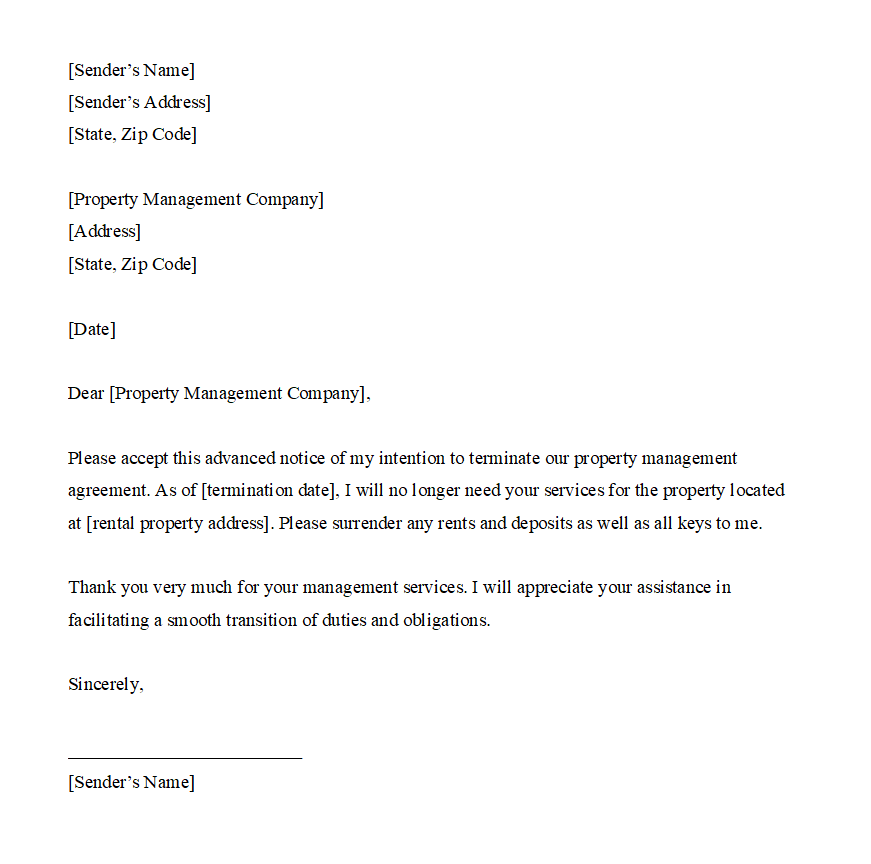
You need to give your property manager or company advance notice of your intention to end your contract. The exact notice period can vary from contract to contract, though it usually falls between 30 and 90 days’ notice. Failure to comply with the notice window might put you in legal trouble for breach of contract.

Additionally, you should make sure notice requirements cut both ways. That means your property management company should also give you at least 30 days’ notice of their intent to terminate.

Here is a notice of property management contract termination template you can use:

property management contract

Download Your Notice of Property Management Contract Termination Template Here


Termination Fees

Ideally, you would not need to pay any fees when you decide to terminate your contract before its expiry. Unfortunately, that is not the case for most companies.

You will usually need to pay a termination fee. This can range anywhere from a few hundred dollars to the total property management fees for the remaining months of the contract. For instance, if your fees total $1,000 a month and there are still nine months left on your agreement, the termination fee would be $9,000.


Duties Upon Termination

Your termination clause should also include the responsibilities of each party upon the cancellation of the contract. Some companies will require you to sign a separate contract termination agreement. Examples of duties include but are not limited to:

  • The property management company must notify the tenant of the change.
  • Any party that owes money to the other party must pay the amount due within 30 days of the termination.
  • The property management company must deliver copies of all tenants’ lease agreements within 14 days of the termination.


The Final Word

You might be eager to sign with a property management company since it means you will have more freedom and less stress managing your rental property. But, in the confusion and excitement, you might skip over essential clauses and details. Always make it a point to review your property management agreement carefully, preferably with the help of your attorney.

Are you on the hunt for the best property management company? Find one near you today with Rental Choice! Our online directory will help you to search and contact property management companies easily.


RELATED ARTICLES:


11 Reasons Why You Should Hire A Property Manager

Many landlords are hesitant to hire a property manager because of the price tag. But, the benefits of hiring a professional property management company actually outweigh the cost.

Why Hire a Property Manager?

Rental property owners juggle a myriad of responsibilities on a daily basis. And while many have already made the decision to outsource the job to a professional, there are countless others who prefer to take a DIY approach. These landlords opt to forgo a property manager for a number of reasons, chief among them being cost. But, hiring a property management company actually has more pros than cons.

Not convinced? Here are the benefits of hiring a property manager:


1. They Understand the Law

Managing a rental property requires a deep understanding of the law. This includes federal, state, and local laws. Owners who choose to do things on their own must familiarize themselves with the Fair Housing Act, state Fair Housing laws, landlord-tenant laws, and even local building codes.

More often than not, though, owners lack legal expertise. As a result, they end up violating a number of laws in the process. This exposes owners to potential liability.

In comparison, property managers are already well-versed in the law. They also make it a point to stay up-to-date on the changing laws that might affect rental properties. This includes tax updates, changes to short-term rental restrictions, and more.


2. Better Quality Listings

There are so many listing websites available today that it can be easy for owners to feel overwhelmed with the options. A property manager will know exactly which mediums to use. Beyond that, they can take professional and attractive photos of the property as well as craft persuasive copy that will entice potential tenants. This will help widen the pool of renters. Owners can also find tenants quicker, thereby reducing the vacancy period.


hiring a property manager3. Rent to Better Tenants

Owners can’t simply rent out their property to the first person who shows an interest. Not all tenants are good. Some tenants won’t take care of the property and even intentionally damage parts of it. Bad tenants are also more likely to pay rent late and break the terms of the lease.

To weed out the bad tenants, property managers use a careful screening process. They do their research and ask for supporting documents from applicants. They do credit checks, employment checks, and background checks. Property managers can even call past landlords as references. This way, they can pinpoint quality tenants.


4. Set the Right Rental Rate

Owners don’t always know how much to charge in rent. They either end up charging too high, which can scare away potential tenants, or too low, which won’t be enough to cover expenses.

Property managers, on the other hand, can conduct market research to determine what the right rental rate is for any given rental property. They do this by looking at the average rental rate in the area as well as taking into account other economic factors. What owners end up with is a fair rental rate that will still earn them profit.


5. Overdue Rent? No Problem!

One of the hardest things about being a landlord is collecting rent. Most tenants pay their rent on time and in full. But, there are some bad eggs that consistently pay their rent late. Dealing with such tenants can be a pain.

A property management company can take over rent collection duties from the owner and, in turn, ease their stress, too. If a tenant is late on their rent, the property manager will take action by sending a notice. Rent collection is also made easy because property managers will receive the rent money and deposit it directly to the landlord’s account.


6. Better for Vendor Relations

Managing a rental property also comes with maintenance responsibilities. Every now and then, owners will need to seek help from vendors such as contractors, handyman services, cleaners, and other suppliers. But, finding and vetting these vendors can also be burdensome.

Property management companies will either have in-house maintenance personnel or an established relationship with a network of trusted vendors. They can coordinate with suppliers, maintenance workers, and repairmen on the behalf of the owner. In case of emergencies, they also know which vendors are available at a moment’s notice. They do all of this while staying within the owner’s budget.


7. It Keeps Things Professional

Far too often, landlords become too friendly with their tenants. The relationship will then turn personal, and some tenants will take advantage of that fact. Similarly, some landlords might not feel comfortable collecting overdue rent when they have become such good friends with their tenants.

A good solution to this is to hire a property manager. A property manager makes sure to maintain professional relationships with everyone in the business. This includes both the owner and their tenants. Taking a professional approach ensures that managers can make decisions without bias or personal judgment.


8. Evictions Made Easier

Unfortunately, there may come a time when a landlord will have to evict a tenant. Typically, this is due to unpaid rent, though it can also stem from some other lease violation. But, evicting a tenant is not as easy as it sounds.

The laws governing evictions can vary from one state to another. This makes it particularly difficult for landlords who own several properties across many states. But, it is part of a property manager’s job to know the law and manage evictions legally. All the owner has to do is provide support and pay eviction costs (including any associated court fees).


hiring a property management company9. More Free Time

Because of the nature of their position, landlords often don’t have a lot of free time on their hands. This is especially challenging for property owners who have 9-to-5 jobs or families to look after.

Hiring a full-time property manager is a great way to cut back on these duties and have more free time. The only things owners will have to do is check their account balance from time to time (for rent payments) and approve withdrawals.


10. More Flexibility With Investments

With a property management company, owners are not confined to a single location. They have more freedom and flexibility to invest in properties outside of their home city or state. This maximizes their earning potential without all the stress of hands-on rental management.


11. Peace of Mind

Finally, when owners hire a property manager, they tend to have more peace of mind. No more worrying about maintenance problems, agonizing over unpaid rent or losing sleep over 3 a.m. phone calls from complaining tenants. Owners can rest easy knowing their property manager has everything under control.


How Much Does It Cost to Hire a Property Manager?

Of course, all of the benefits outlined above come with a price. If owners are wondering how much to hire a property manager, money-wise, it depends. A lot of factors can affect the cost of property management, including location, the size of the property, the type of property, and the extent of services involved.

Some companies also charge a flat rate every month, whereas others charge a percentage of the monthly rent. Generally, though, owners should expect to pay 8% to 12% of the monthly rental rate. It is best to make sure that the contract specifically states that the percentage is taken from rent collected instead of rent due. This way, owners won’t be paying the company if they fail to collect rent.


How to Hire a Property Manager

It is clear that the benefits of hiring a manager outweigh its costs. But, what exactly is involved in the hiring process? Here is a brief guide on how to hire a property management company.

  • Determine Needs. First, owners must identify what services they need or want. Are they looking for someone to just collect rent or someone who will do everything? Keep in mind that the broader the scope of work, the higher the fees.
  • Do Research. Next, owners must do their research. Look for management companies online and check their reviews, too. They can also ask other landlords for referrals.
  • Interview Companies. Before choosing a firm, it is imperative to interview each candidate. Sit down and ask the right questions.
  • Check Qualifications. See to it that the company is qualified for the job. Check their licenses and certificates, references, and insurance.
  • Iron Out the Contract Terms. Finally, it is time to negotiate the terms of the contract. Make sure the contract details everything, including the scope of work, fee structure, and a termination clause. Owners would do well to consult an attorney to ensure the contract is not unfair.


Should I Hire a Property Manager?

The question of whether or not owners should outsource property management depends on their individual situation. Though it is not always necessary, there are definitely many advantages when owners hire a property manager. It allows more flexibility in terms of investments and time while simultaneously maximizing earnings.

Are you ready to hire a property manager? Find the best one in your area today with the help of Rental Choice’s comprehensive online directory.


RELATED ARTICLES:


Property Management Services: What Can You Expect?

Landlords who lack the time and expertise to manage their rental property can always turn to a property management company. But, what property management services do these companies typically offer?


The Need for Property Management Services

Property management is no simple task. While there are owners who prefer to take the DIY approach, there are many more who would rather outsource the job to a trained professional. One might wonder why a landlord would even bother to pay someone else to manage their property. After all, that would mean less profit for them. But, there are several reasons why an owner would choose to avail of property management services.

What is the purpose of property management companies? Property management companies make it significantly easier for landlords to accomplish their duties. Essentially, property management companies take over the day-to-day management of rental properties.

Landlords may want to hire them for one of the following reasons:

  • The owner/landlord does not have enough time to devote to property management.
  • The owner/landlord lacks the skills or expertise to manage their rental property.
  • Hands-on property management just does not interest the owner/landlord.
  • The owner/landlord owns several investment properties (whether in the same area or not).
  • The owner/landlord does not live near the rental property.

Clearly, there is a demand for professional property management. But, what do property managers do anyway?


What Services Do Property Management Companies Provide?

Property management companies come in all shapes and sizes. Some offer all-around rental management services, while others only offer a select few. Additionally, the exact nature and extent of services landlords receive from their company will depend on their agreement. These services must be expressly outlined in the property management contract to avoid misunderstandings.

What services does a property management company provide? Though it can vary from one company to another, owners should generally expect the following:


1. Rental Rate Setting

First up on this property management services list is the rental rate setting. Owners don’t always have a good understanding of the rental market in their area. This often leads to setting a rental rate that is too high or too low. Neither is beneficial for landlords, as too high a rental rate can turn off potential renters and too low a rental rate can result in a net loss.

A property management company can perform thorough market research of the local area to determine the optimal rental rate. Of course, they will also factor in the rental property itself. For instance, if the property comes with nice amenities, that could drive the rate higher. With a professional setting the rental rate, landlords can maximize their earning potential while retaining quality tenants.


best property management services

2. Property Listing and Showing

Listing a property online may sound easy, but there is a lot more that goes into it than it seems. A property management company can create a compelling ad for the rental property and accompany it with visually appealing photos. Companies also know which channels and websites to use to truly widen the search pool.

If there are any interested tenants, a property manager can take over property showings as well. This eliminates the need for landlords to be on call for the entire time the property remains vacant.


3. Tenant Screening

Tenant screening is one of the more common property management company responsibilities. Companies know just how valuable a good tenant can be, but they are hard to find. Thus, they use established screening strategies to separate the bad tenants from the good ones. A typical screening process involves background checks, credit checks, and employment checks, as well as calling previous landlords for reference.


4. Tenant Application and Move-in

Once a tenant shows interest in the property, they can apply for it. Companies already have application forms tenants can fill out. They can also take care of drafting the lease agreement according to the specifications of the owner. From there, they can facilitate the signing of the lease and ensure a smooth move-in process for the tenant.


5. Property Inspection

As part of their services, property managers will conduct property inspections on a routine basis. This is to identify any potential maintenance issues early on and remedy them before they get out of hand. It also acts as a way to ensure the tenant has not damaged the property. In addition to routine inspections, property management companies also perform move-in and move-out inspections, complete with reports and photos for documentation.

Property inspection is an important part of managing a rental. As such, owners should include it on their list of non-negotiable property management duties and responsibilities.


6. Rent Collection

Rent collection is one of the more typical services for property management. It is almost impossible not to find a company that collects rent on behalf of the owner or landlord. As rent is the primary source of a landlord’s income, it is easy to see why it is a staple of property management services.

Property managers will make sure that tenants pay their rent on time. In addition to handling rent payments, managers will impose late fees and send pay or quit notices.


7. Tenant Management

If a landlord only has one tenant, fielding their calls comes relatively easy. But, many landlords manage several tenants at once, making it immensely difficult to keep track of them.

A property management company has the required resources and manpower to deal with all of those tenants combined. They have established systems that classify each tenant and tag service requests to individual accounts. Property managers can also act as the point person, taking calls from tenants in place of the owner, including emergency calls. That means no more waking up in the middle of the night to constantly ringing phones.


8. Budget Management and Reporting

Professional property management services also normally offer financial management. This involves managing owner and tenant funds, carrying out maintenance and repairs while staying within the budget, and even submitting monthly financial reports to the owner. Moreover, property managers will often be the ones to send out payments to vendors and other parties, including insurance providers, contractors, and HOAs.


9. Property Management and Maintenance

Another one of the more common property management company services is maintenance. By hiring a professional, owners need not worry about constant property maintenance and repairs anymore.

On top of conducting regular property inspections, property managers will coordinate with maintenance personnel (either in-house or third-party vendors) to get issues fixed early. Property management and maintenance also cover general cleaning, preventive maintenance, large-scale projects, landscaping, and the like. If the company does not have an in-house maintenance crew, they usually have a network of trusted and licensed vendors prepared to do the work for them.


10. Legal Compliance

Property management requires a comprehensive understanding of the law. There are many laws that apply to rental properties, such as the federal Fair Housing Act, state-level Fair Housing laws, and landlord-tenant laws. Local building codes and ordinances also exist.

Part of a property management company’s job is to ensure the rental property and, by extension, the landlord remains in compliance with the law. This protects the owner from potential liability.


property management services list11. Eviction

When a tenant has stopped paying rent or broken the lease, eviction is often necessary. But, eviction is not a simple undertaking. In fact, because of the requirements and procedures involved, a lot of landlords just endure bad tenants. Not with a property management company, though.

A property management company can process evictions for owners. They can prepare all the documents needed as well as provide legal counsel. This property management service, though, usually comes with an extra fee attached.


12. Tax Assistance

Last on this list of property management services is tax assistance. While companies will not do the owner’s taxes for them, they typically provide help for taxes and deductions related to the rental property. This includes supplying a 1099 form. Keep in mind that not all companies offer tax assistance, though.


Find the Best Property Management Services

All things considered, it is clear that hiring a property management company poses plenty of benefits. With all these services included, property owners can rest easy knowing their investment is in good hands.

Are you in need of property management services? Start your search for the best company in your area using Rental Choice’s online directory.


RELATED ARTICLES:


How To Become A Landlord And Be A Great One

Managing a rental property is not always an easy endeavor, especially if you’ve never done it before. Familiarize yourself with the steps on how to become a landlord, and you’ll be well on your way.


A Guide on How to Become a Landlord

There are many things that can trigger your interest in becoming a landlord. Perhaps you own an unoccupied property and are in need of extra money. Maybe you’re looking for your next investment opportunity. Or, perhaps you’re just genuinely curious about the requirements to be a landlord.

Is owning rental property worth it? Being a landlord often involves a lot of time and work. But, when done correctly, you can get a sizable return on your investment. Do landlords make a profit? How much money do landlords make a year? The national average landlord salary currently sits at $73,659 a year, which translates to about $35 an hour.

While you can certainly learn on the job, it’s better to go into your landlord duties already knowing what to do. This will minimize the risk of error, which can sometimes be costly or troublesome to remedy. Here are the steps on how to be a landlord:


1. Do Your Research

How do I start being a landlord? With research, of course. Before you can start renting to tenants, you first need a property to rent. That means researching the right locations and price points.

Your main goal here is to earn rental property income, and you can’t do that if you make a bad investment. Make sure the rent you charge can cover the monthly expenses associated with the rental property.


how to be a landlord2. Familiarize Yourself With the Law

A first-time landlord should get acquainted with the many laws that affect landlords, tenants, and rental properties. This includes the federal Fair Housing Act and the Landlord-Tenant Law. States also usually have their own fair housing and landlord-tenant laws, so you should familiarize yourself with those as well. Making sure you comply with these laws can protect you from the risk of legal liability.


3. Invest in a Property

Buying a rental property takes time and consideration. After settling on a location, you should make sure the property you end up choosing fits your budget. It’s unwise to invest in a rental property you can’t afford. Another critical criterion is the condition of the property. Although you can probably get them for cheap, a property that’s in need of major repairs will only cost you more money in the long run.

After buying your rental property, you should make time to get it move-in ready. That means applying a fresh coat of paint, doing some cleaning, and making any necessary repairs. You should also see to it that the property complies with health and safety codes.

Test out smoke and carbon monoxide detectors. Doors and windows should lock and unlock properly. Lastly, have a professional check the electrical system.


4. Manage Your Financials

An essential part of any rental property business plan is financial management. Make sure to do correct accounting and bookkeeping right from the get-go. This involves keeping accurate records of all financial transactions as well as any supporting documents (such as receipts).

Proper accounting and bookkeeping will help establish a strong foundation for your financial system and avoid potential problems in the future. It will also allow you to create financial statements easily and make tax season a breeze.


5. Set the Right Rental Rate

You want to strike the right balance when it comes to determining your rental rate. Charging too high a rent can scare away potential tenants, while too low might earn you a loss.

How much can I charge to rent my house? You start by looking at the cost of rent for properties in your surrounding area. Compare your rental property type (single-family home, one-bedroom apartment, etc.) with similar types in your location. Once you have a rough figure in mind, make sure it covers the cost of your monthly rental property expenses.


6. Advertise Your Rental Property

Now that your property is move-in ready and you know how much rent to charge, it’s time to market your listing. The most popular way to advertise rental properties is through online mediums. This includes rental property websites like Zillow or Apartments.com as well as social media. Be wary of sites like Craigslist, though, as those aren’t generally reliable.

When creating your listing, make sure to include flattering, high-quality photos of your rental property. You should also include all pertinent details, such as the number of bedrooms and bathrooms, specific amenities, and any special rules you may have (such as no pets allowed).


7. Buy the Necessary Insurance

Insurance will protect your rental property from liability such as accidents or natural disasters. There are many types of insurance available depending on the provider. But, you should typically get coverage for your property’s structure and loss of rental income in case of repairs. It’s also a good idea to obtain a policy that covers any medical or legal costs associated with your rental.

It’s worth noting that landlord insurance is separate from renters insurance, which covers the tenant’s belongings. Therefore, you should require renters insurance from your tenants to avoid any problems.


8. Screen Tenants

If you market your property well, you’ll soon have a flood of applications pouring in. But, how do you filter through a sea of interested tenants and narrow down your options? Simple — screen them.

Good tenants aren’t easy to find, but screening applicants certainly helps. Make sure to conduct checks of their background, credit score, criminal history, employment status/history, and rental history. You should also ask applicants for references. The tenant screening process is quite demanding and time-consuming. Luckily, there are services that can do them for you.


9. Draft Your Lease

Your lease needs to be detailed and specific. Avoid basic, barebones leases that could work for anyone — those aren’t going to protect you enough. Consider how you feel about pets, parking, smoking, etc. on your property. How will you set the rules? Spell everything out, and make sure your attorney takes a look at any additions you make before you have the tenant sign.

And, remember that depending on where you live, there may be specific landlord-tenant laws that you have to follow and include in your lease. Then, go through the lease with your new tenant. Explain each section, answering any questions they might have. This protects you in case there are any problems or complaints that come up.


how to become a property manager10. Stay on Top of Maintenance

Maintaining your rental property is a vital part of your duties as a landlord. This helps you provide a habitable home for your tenants and keep them satisfied. Make sure to conduct regular inspections of your property to see what needs maintenance or repairs. Preventive maintenance also involves scheduling monthly pest control services, replacing HVAC filters, and cleaning the gutters.


Additional Tips on How to Become a Landlord

How do I become a successful landlord? Here are some tips on how to manage a rental property with great success:

  • Use a Rental Application. A rental application form will allow you to collect all the necessary information from applicants. It also allows you to ask important questions such as, “Why are you moving?” and “Have you ever been evicted?
  • Avoid Scams. Online scams are a very real thing, so protect any pictures and information you share in listings. Watermark your images by putting your phone number on them to prevent others from stealing them and making a fake listing to scam potential renters. And, avoid posting your exact address.
  • Communicate by Mail. Put everything in writing to avoid confusion and always have a record of what you said. Email might be okay as a legal form of communication, depending on your state, but mail definitely is. If you want to be sure you’re communicating in a way that is official by law, send any notices or reminders by mail.
  • Collect Rent Online. Late rent payments are one of the most common problems landlords face. Make it easy for tenants to settle (and for you to collect) rent by allowing online payments.
  • Offer Renewal Incentives. If you want to keep a good tenant, make it worth their while to renew their lease. Offer incentives such as discounts or free upgrades.
  • Set Up a Contingency Fund. A good landlord always sets aside money for contingencies. This way, you won’t be strapped for cash when an unexpected expense comes up.


Do You Need Professional Property Management Services?

You might think they’re one and the same, but being a landlord and being a property manager are two distinct things.

What is a landlord? A landlord is someone who rents a property (usually a property they own) to a tenant. Being a landlord comes with many duties, such as advertising the rental property, screening tenants, setting and collecting rent, and maintaining the rental property.

In comparison, a property manager is someone who professionally manages rental properties. Property managers usually perform the same duties as a landlord for a fee. The requirements for how to become a property manager, though, are different from those of a landlord. The former typically needs a license, while the latter does not.

If you’re a landlord, it’s best to seek the help of a property manager or management company if you:

  • Live far away from your rental property;
  • Lack the time or skills to manage your rental property; and/or
  • Aren’t interested in hands-on rental management.


Is Being a Landlord Easy?

Being a landlord is a full-time job. It’s not always an easy path to tread, but when done properly, it can be very rewarding and fruitful. Hopefully, these steps and tips on how to become a landlord can help you get started on the right foot.

If you prefer to seek professional services, though, you can always find them on Rental Choice. Use our online directory to look for the best property management companies in your area.


RELATED ARTICLES:


How To Foster A Good Landlord Tenant Relationship

A good landlord tenant relationship can help you retain good renters. Cultivating a bond based on mutual respect, though, is often easier said than done.


The Importance of a Good Landlord Tenant Relationship

What is a landlord tenant relationship? It’s exactly as it sounds — it’s a term used to describe the relationship between a landlord and their tenant. This usually refers to the contractual relationship between tenants and landlords, but it can also extend beyond the impersonal.

A healthy relationship between landlord and tenant can benefit both parties in many ways. For landlords, it means retaining quality tenants and minimizing vacancy rates. This, in turn, directly affects turnover costs in a positive way. The longer your tenant stays, the less you need to spend on the turnover process.

Additionally, should your tenant ever move out, they can help with the tenant search process. They can provide you with referrals and recommendations, reducing the need to market your property.

For tenants, a good relationship means your landlord will address your concerns quickly and may exercise leniency when it comes to minor lease violations. The benefits can also continue even after you move out. Past landlords can provide excellent testimonials and endorse you to your would-be landlords.


How to Build a Great Tenant Landlord Relationship

A good relationship between landlords and tenants doesn’t just come naturally. It requires effort on both the part of the landlord and the tenant. If you’re the former, here are some tips on how you can build a positive landlord tenant relationship:


1. Find Good Tenants

It’s hard to build a good relationship with a bad tenant. To make sure you end up with a quality tenant, don’t skimp out on tenant screenings. This usually involves running checks on their employment, rental history, credit score, and criminal history.


2. Set Expectations from the Start

It’s important to make sure the relationship between you and your tenant starts off on the right foot. For landlords, that usually means setting expectations from the get-go. Let your tenant know what they can expect from you as a landlord. It’s also worth discussing any policies and processes you have in place.

Finally, make sure to tell them not to hesitate to come to you with questions or concerns. In doing so, you can establish a welcoming persona and make it easier for tenants to approach you with problems.


3. Communicate Regularly

Like any other healthy relationship, a good landlord tenant relationship relies on open communication. Provide your tenants with your phone number and email address. Talk to your tenants and pay property visits on the regular, even if you’re just checking up on them. This type of personal touch will really let your tenants know that you care.


4. Respond and Address Concerns Immediately

It’s not enough to make yourself available to tenants — you also need to be responsive. When you receive a complaint or maintenance request, reply to them as soon as you can. Moreover, you should address their issues in a prompt manner. Don’t make your tenants wait too long that they start to grow impatient.

You can even take it one step further and provide your tenants with an online portal. Tenants can use this online portal to communicate with you, submit maintenance requests, and even pay rent online. Convenience is an asset in the rental property management arena.


renter relations5. Maintain the Property

Performing regular maintenance is part of your job as a landlord. In fact, according to the Landlord-Tenant Law, you’re legally required to provide your tenant with livable conditions. But, don’t just do the bare minimum.

Go above and beyond with maintenance. Also, take the initiative to perform maintenance and repairs if you spot any declining features in your rental unit. You can even provide upgrades or improvements to endear yourself to your renter. Remember, if the place isn’t good enough for you, it’s definitely not good enough for your tenant.


6. Respect Your Tenant’s Privacy

Your tenant has a right to quiet enjoyment and privacy. Therefore, you should respect their need to be in their own space without you interfering all the time. You might own the place, but your tenant pays you to live there.

The key to great tenant relations is to be mindful of their belongings. And, if you need to enter the unit, make sure to provide proper notice. The amount of notice required depends on the state, but it’s usually at least 24 hours’ notice.


7. Treat Your Rental Like a Business

Your rental property is very much like a business, so it makes sense for you to run it that way. In that case, your tenants are your customers, which means you should treat them as such — with respect and care. Similarly, your rental property is your product, so you should constantly try to improve it in any way you can.


8. Be Compassionate Yet Firm

Maintaining excellent renter relations often requires striking the right balance between compassion and strictness. Sure, you might have stringent policies and restrictions, such as no pets or no overnight guests. But, that doesn’t mean you can’t be accommodating, especially when it comes to good tenants.


For Tenants: Do Your Part

Building a good landlord tenant relationship is a two-way street. As a tenant, that means doing your part to contribute. How do I have a good relationship with my landlord?

  • Pay Rent on Time. The simplest way to cultivate a good relationship with your landlord is to consistently pay rent on time and in full. If you tend to be forgetful, try to pay in advance or set reminders on your phone before the due date.
  • Maintain Cleanliness. Treating the property as if it’s your own is a surefire way to get on your landlord’s good side. Clean the place up regularly and make sure to take care of any appliances that come with the unit.
  • Report Damages at Once. Fixing damages immediately can prevent their condition from worsening. Therefore, if you find any damages (even if you caused them), don’t try to hide them and report them at once.
  • Be a Good Neighbor. Reduce the number of complaints your landlord has to deal with by being a good neighbor. That means picking up after your pet, no foul odors coming from your unit, and keeping the noise to a minimum.
  • Follow Lease Terms. Nothing says “outstanding tenant” like following the terms of your lease to a T. If your lease says you can’t sublet or use your apartment as a place of business, make sure to comply.
  • Understand Your Landlord. Your landlord is a person, too, with their own problems and schedules. Therefore, you should try to be understanding and avoid making unreasonable demands.
  • Say Thanks. A little thanks goes a long way. Show some appreciation for your landlord by complimenting new upgrades to the property, sending them a small gift, or even just writing them a thank-you note.


A Property Manager Can Help

When it comes down to it, you can form a great landlord-tenant relationship by simply performing your duties and just generally being a good person. Landlords, though, can pass on the burden of maintaining this relationship — as well as other landlord tasks — to a property manager.

Searching for a property manager who can nurture tenant relations is often difficult. But, you can simplify the process with the help of Rental Choice’s online directory today.


RELATED ARTICLES:


Watch Out For These 5 HOA Security Mistakes

Homeowners association security should not be taken for granted. To keep your entire community safe, here are five crucial HOA security mistakes to watch out for.


Why is HOA Security Important?

Security is one of the major reasons why people choose to live in an HOA community. However, living in a gated, secluded enclave doesn’t automatically guarantee that homeowners will be safe. Crime can happen anywhere and at any time. As such, HOAs must take the necessary steps to protect the safety of each member of the community.


Is HOA Responsible for Security?

HOAs are not legally responsible for preventing criminal acts of third parties that take place in homeowners’ private properties. The main purpose of an association is to preserve property values by maintaining common assets such as clubhouses, swimming pools, gyms, sidewalks, roads, parking lots, and entry gates.

However, there are certain instances where an HOA could be held liable for personal injury, damage, or loss. For example, it is the responsibility of the HOA to replace the lightbulbs in common areas like the parking area. If a homeowner is held-up because the area was dimly lit, he/she could use that to file a lawsuit and seek damages from the HOA.

To determine the extent of the HOA’s liability, check your Declaration of Covenants, Conditions, and Restrictions (CC&Rs). If there are HOA security responsibilities, the association must ensure that they are being met.

In addition, have an attorney look through your governing documents. You want to avoid statements that homeowners can interpret as guarantees of security. It’s also important to issue a security disclaimer to protect the HOA from liability in case of criminal acts by third parties.


What Security Protocols Should HOA Implement?

Even though the HOA is not responsible for homeowners’ safety, that doesn’t mean that the board cannot take reasonable steps to protect the safety and welfare of the entire community. Using the HOA’s pooled resources, board members can implement security measures such as ensuring proper lighting in parking areas, as well as installing security cameras in common areas.

Security cameras in an HOA are very common. Depending on your governing documents, the association may not need approval or consent to install HOA security cameras in common areas. However, they should not be installed in areas where there is a “reasonable expectation of privacy” such as bathrooms, locker rooms, and areas that point towards private property.

To avoid violation of privacy claims from homeowners, it’s important to have an HOA security camera policy in place. The policy should cover who has access to the footage, where the footage is kept, and how long the footage is kept before being destroyed. It’s also better to inform homeowners of such measures and ensure that there are proper signs throughout the common areas.


5 Critical HOA Security Mistakes to Avoid

Apart from implementing security measures such as an HOA video surveillance policy or enlisting HOA security services, here are crucial security mistakes that HOAs should avoid at all costs.


1. Not Conducting a Security Assessment

An HOA security assessment is essential in identifying potential safety risks and hazards in a community. Without it, the association will be vulnerable and exposed. If you haven’t already, it’s time to schedule a security assessment. A security assessment should be done at least once a year but HOAs in high-crime-rate areas may want to have it more frequently.

With a security assessment, professionals will come in to assess the current security level of the HOA. The in-depth analysis will identify critical areas that need prompt attention, as well as make recommendations that will keep the community safe and secure. The licensed security analysis will work together with the board to choose vendors, such as HOA security companies, that match the association’s financial capabilities


2. Implementing the Wrong Security Measures

Some communities might be fine with security cameras while others might need security guards. HOA security measures should be tailored to each community. Don’t just copy what others are doing. Otherwise, you might end up implementing the wrong security measures. Make sure that you choose measures that properly address the security gaps in your community.

In addition, associations should not scrimp on security measures. Choosing the lowest bid might seem better for your finances today but it could end up hurting you more in the long run. For example, if you choose a less competent security company, their lapses could lead to expensive losses or damage to the HOA. Don’t even think of installing dummy security cameras. The HOA will likely be liable if something bad happens.


3. Forgetting to Foster a Relationship with Local Police

hoa securityIt’s important to develop a strong relationship with your local police department. You don’t want your only contact with them to be when there is an incident or emergency. Make sure to reach out before you even need to make that call. You can invite your assigned community liaison officer to HOA meetings and social events. Meeting your contact person makes it much easier to create a close relationship. Another way to foster the relationship is to support police events. The HOA can establish goodwill by offering its services during events or donating to its cause.

HOAs should also remember not to abuse this personal relationship. Only contact the local police when absolutely necessary. For example, the HOA is more than capable of handling noise or speed complaints. If you contact the police for every infraction, they may not feel compelled to respond with urgency. This could be fatal in case there is a real emergency.


4. Failing to Involve the Community

Many board members fail to see the important role that homeowners play when it comes to improving HOA security. By creating a sense of community, HOAs can make it harder for outsiders to commit crimes or illegal activities. Promote events where homeowners can get to know their neighbors. That way, homeowners will be able to tell if there are suspicious persons loitering inside the community. You can even set up a neighborhood watch program to enhance HOA security.

The HOA can also host events and materials that educate homeowners on HOA security. Invite professionals that can teach them best practices and tips to keep their private property safe. For example, it’s a good practice to inform your neighbors if you are going out of town. If they see anything suspicious while you are away, they can immediately contact security or the police.


5. Not Utilizing Landscape Design to Improve Security

Safety equipment such as security cameras and door access controls are effective but also very expensive. Good landscape design can help enhance HOA security without breaking the bank. Greenery such as thorny shrubs can act as physical deterrents. You can install them in critical areas to limit unauthorized entry into your community.

Regular landscape maintenance is also crucial in deterring criminal activity. Criminals can use overgrown foliage to hide and wait for their victims. As such, make sure to trim shrubs and trees so that homeowners always have a clear view of their neighborhood. Trees should likewise be trimmed so that they do not obscure security cameras and important safety signs.


Avoiding HOA Security Mistakes is in the Best Interest of the Community

The HOA may not be legally responsible for homeowners’ safety but it’s in their best interest to ensure that the community is safe and secure. HOA security is a complex matter that deserves your full attention. Board members must take the necessary steps — such as having an annual security assessment and fostering a good relationship with local enforcement — to create a safe


Need help with HOA security? Feel free to browse the Rental Choice online directory to find the best management company in your area!


RELATED ARTICLES: