

The Truth About Low-Maintenance Flooring for Rental Properties

Many landlords search for low-maintenance flooring for rental properties hoping it will reduce repairs, tenant complaints, and replacement costs. The idea sounds simple: install a floor that requires little care and forget about it for years.

The reality is a bit more complicated. Some materials marketed as “low-maintenance” do not actually hold up well under the constant wear and turnover that rental properties experience.


The Low-Maintenance Flooring for Rental Properties Myth

durable rental property flooring

The phrase low-maintenance flooring for rental properties gets used frequently in renovation guides and real estate advice. While it sounds appealing, it can sometimes create unrealistic expectations for property owners.

A floor might require minimal cleaning, but that does not mean it will resist scratches, stains, moisture, or heavy foot traffic. Rental homes often experience higher wear than owner-occupied homes because tenants move furniture more frequently, pets may be present, and turnover periods bring additional activity.

Property managers quickly learn that the most important factor is not how little maintenance a floor needs. What really matters is how well the material holds up over time. Durable materials often outperform so-called low-maintenance options when it comes to long-term costs.


Why Flooring Matters in Rental Properties

Flooring is one of the most visible parts of a rental unit. It affects the property’s appearance, perceived value, and tenant satisfaction.

When flooring deteriorates quickly, landlords face multiple issues at once. The unit may look worn or outdated, tenants may report damage, and turnover repairs can delay the next lease.

Good flooring choices also impact operating costs. Durable floors reduce replacement frequency and minimize maintenance calls. Property managers often focus on flooring upgrades because they directly influence both rental appeal and long-term property value.

In many cases, investing in stronger materials upfront saves money over time.


What Makes Flooring Durable in Rental Unitsdurable rental property flooring

Durability in rental flooring depends on several factors. A material must handle everyday traffic, accidental spills, furniture movement, and routine cleaning without significant damage.

The following characteristics usually indicate flooring that performs well in rental properties:

  • Scratch resistance – Important in units where tenants may have pets or move furniture.
  • Moisture resistance – Critical for kitchens, bathrooms, and entryways.
  • Easy repairs – Some floors allow damaged pieces to be replaced without removing the entire surface.
  • Long life span – Materials that last longer reduce turnover costs.

Property managers often evaluate flooring based on how it performs across multiple lease cycles. A floor that looks good after five tenants is usually more valuable than one that needs replacement every few years.


Flooring Options That Often Work Best in Rentals

Not every flooring material performs equally in rental properties. Some surfaces that look attractive in showrooms struggle under daily wear.

Below are several flooring types that tend to hold up well in rental environments.

Luxury Vinyl Plank

Luxury vinyl plank has become one of the most popular flooring choices for rental properties in recent years. It offers the appearance of hardwood while providing better resistance to moisture and scratches.

This material also performs well during tenant turnover. Individual planks can often be replaced without removing the entire floor, which helps reduce repair costs.

Another advantage is installation flexibility. Many vinyl plank systems use click-lock installation, allowing faster replacement when necessary.

Tile Flooring

Tile remains one of the most durable flooring materials available. It handles moisture well and can last for decades when installed correctly.

Because of its durability, tile is commonly used in kitchens, bathrooms, and laundry areas. It resists stains and scratches better than many other flooring types.

However, tile installation can be more expensive. Property owners should also consider grout maintenance, which may require occasional cleaning or sealing.

Laminate Flooring

Laminate flooring offers a balance between durability and cost. Modern laminate products often include protective wear layers that help resist scratches and scuffs.

Laminate also provides a wide range of design options. Property owners can choose finishes that resemble hardwood or stone without the higher cost.

While laminate handles foot traffic well, it can be vulnerable to water damage. For that reason, it may work best in living areas and bedrooms rather than moisture-heavy rooms.

Engineered Hardwood

Engineered hardwood gives rental units a high-end look while offering better stability than traditional hardwood.

The layered construction helps resist warping caused by humidity changes. This makes it more reliable in different climates.

Still, engineered hardwood requires careful consideration. It is more expensive than vinyl or laminate, and deep scratches may be harder to repair.


Flooring Materials That Can Cause Problems
durable rental property flooring

Some flooring options appear attractive at first but often create challenges for landlords.

Carpet

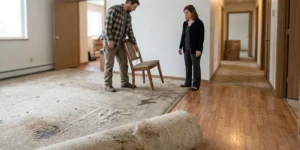
Carpet used to be the default flooring choice in many rental properties. Today, many property managers avoid it due to maintenance concerns.

Carpet tends to absorb stains, odors, and pet hair. Even with regular cleaning, it can wear down quickly in high-traffic areas.

Turnover costs also increase with carpet. Many landlords find themselves replacing it every few years, especially in busy rental units.

Soft Hardwood

Traditional hardwood floors may look beautiful, but softer species can scratch easily. Tenants moving furniture or having pets may cause visible damage.

Repairing hardwood also tends to be expensive. Refinishing floors requires time, labor, and temporary vacancy.

Because of these challenges, many property owners choose alternatives that mimic the look of wood while providing better durability.


Maintenance Still Matters

Even the most durable flooring requires regular care. Property managers should establish simple maintenance expectations for tenants.

Basic maintenance practices include:

  • Routine cleaning to remove dirt and debris
  • Prompt cleanup of spills
  • Using furniture pads to reduce scratches
  • Following manufacturer cleaning guidelines

Providing tenants with clear instructions can help extend the life of flooring materials. Some property managers include flooring care guidelines in their lease agreements or move-in documents.

Preventive maintenance also helps avoid larger repairs down the road.


Balancing Cost, Durability, and Appearance

durable rental property flooring

Choosing flooring for a rental property often involves balancing several priorities. Owners want materials that look appealing but also perform well over time.

Budget naturally plays a role in these decisions. While cheaper materials may reduce upfront costs, they often require replacement sooner.

Property managers frequently evaluate flooring based on three main factors:

  1. Initial installation cost
  2. Expected lifespan
  3. Maintenance requirements

When these factors are considered together, the most affordable option is not always the least expensive long term.

Durable flooring that lasts through several tenants may ultimately save money by reducing repair costs and minimizing vacancy periods.


How Property Managers Approach Flooring Decisions

Experienced property managers take a practical approach when selecting flooring. Instead of focusing solely on appearance or marketing claims, they consider how materials perform in real rental situations.

Several strategies commonly guide their decisions:

  1. Standardizing flooring across multiple units to simplify repairs and replacements.
  2. Choosing materials with readily available replacements in case of damage.
  3. Avoiding overly delicate finishes that require specialized care.

These strategies allow property managers to streamline maintenance and control renovation costs across an entire portfolio.

Maintenance planning also plays a major role in successful rental operations. Property managers often oversee repairs, inspections, and routine upkeep to ensure properties remain in good condition for tenants.


The Truth About “Low-Maintenance” Flooring

durable rental property flooring

The idea of completely maintenance-free flooring is largely unrealistic. Every material requires some level of care and eventual replacement.

What truly benefits rental property owners is choosing flooring that can withstand real-world conditions. Durability, repairability, and lifespan tend to matter more than marketing labels.

A thoughtful flooring choice can reduce headaches for both landlords and tenants. When the right material is installed, it helps maintain property value and keeps rental units looking clean and appealing.


Choosing Flooring That Actually Lasts

The best flooring for rental properties is not always the one marketed as low maintenance. Instead, it is the material that balances durability, cost, and long-term performance.

If you are planning upgrades or managing multiple properties, consider working with professionals who understand how flooring choices impact rental performance. Check out our online directory to find one today!


Related Articles

Best Practices for Tenant Communication

Quiet buildings do not happen by luck. Clear tenant communication keeps small issues small and helps your team stay on track.

Tenant Communication Sets the Tone

renter communications

The first weeks of a lease shape the months after. Early tenant communication shows residents how your office works and what help looks like. A resident who knows the process feels less stuck.

Clear expectations lower stress for everyone. Fewer “urgent” texts show up at 10 p.m. Fewer mix-ups show up when a repair needs parts. A clear plan also cuts down on hallway rumors and guesswork.

Trust builds in normal moments. A quick reply, a fair answer, and a calm update all add up. Over time, that steady tone becomes the standard. Small wins matter more than big speeches.

Expectations at Move-in

Move-in week is loud and busy. New keys and new rules can feel like a lot. A short welcome note can cut down on repeat questions.

One simple “contact map” helps a lot. Office hours, key contacts, and the best channel for each request should sit in one place. The same wording should appear in the lease and the resident portal. A link to the right form can save several emails.

Plain boundaries help, too. A clear line between “urgent” and “can wait” keeps nights calmer. A friendly tone keeps the message from sounding like a threat. A short list of what counts as an emergency helps residents choose well.

Channels That Keep Boundaries

renter communications

The channel changes how a message feels. Text feels quick and personal. A portal keeps work orders, photos, and updates in one thread.

Clear rules help residents choose well. Routine questions belong in email or the portal. Safety issues belong on the phone. One shared inbox also helps when someone is out sick.

Office hours deserve a simple reminder. After-hours rules should be easy to follow. That clarity keeps tenant communication from turning into guesswork. Auto-replies can reinforce the right channel without sounding cold.

Response Times That Build Trust

Fast replies feel great. Reliable replies feel better. tenant communication improves when residents know what to expect. A clear first-response promise can calm a tense day.

A short reply helps right away. Receipt gets confirmed, and the next step gets named. A time for the next update also gets shared. That small note can stop a second message from landing five minutes later.

Shared response targets protect staff, too. A steady pace cuts stress and burnout. The same standard also keeps residents from pushing harder each month. Better service often comes from a pace the team can keep.

A few reply times often help:

  • Routine questions: within one business day
  • Maintenance requests: same-day acknowledgement
  • Urgent issues: faster, with a clear call chain
  • After-hours emergencies: a call-back plan that residents understand

Maintenance Updates That Calm

renter communications

Maintenance creates the most emotion because it affects daily life. A clear update can turn a delay into a shared plan. Silence, on the other hand, tends to invite anger.

Simple details help the most. The day of the visit, the rough time window, and the name of the vendor can reduce stress. Entry notices should follow your lease and local rules, and the language should stay plain.

Delays deserve honest updates. Parts get back-ordered, weather slows work, and schedules shift. A short note that explains the change and sets a new check-in time keeps the thread calm.

Notes That Protect Everyone

A clean record prevents long arguments. A short recap after a call can confirm the plan. Dates and next steps should be clear. Time and date stamps also help when memories differ.

Fairness gets easier with good notes. Two residents with the same issue should get the same answer. Shared records help new staff step in without confusion. A clear history also helps when a problem repeats.

Some topics need extra care. Rent disputes and safety concerns should stay in a formal channel. Disability-related requests also need a clear, steady process. The goal is a fair path that stays the same for everyone.

Tone Matters More Than Expected

renter communications

A message can be “right” and still land wrong. Word choice and timing shape how a resident reads it. Money and repairs raise emotions fast. A calm greeting can soften a hard message.

Warmth does not mean fluff. A short “thanks for letting us know” can help. A simple “I understand the concern” can also help. Clear words can still sound human.

Plain language beats fancy phrasing. Short sentences work better than long ones. That habit keeps tenant communication clear on busy days. One idea per sentence usually reads best.

Difficult Moments Without Drama

Complaints happen in every building. A steady response pattern keeps the team calm. The same pattern also helps residents feel heard. Blame rarely fixes a leak or a noise issue.

A brief pause before replying can save time. Facts matter more than heat. Prior notes can also change the right next step. A calm reply protects the relationship, even when the answer is “no.”

A simple structure works in tense moments. The concern gets named, the next step gets stated, and a timeframe gets shared. Better tenant communication often comes down to that rhythm. Clear follow-up dates prevent “checking in” messages all week.

Systems for Consistent Renter Communications

renter communications

Too many channels create chaos. A portal for work orders and notices helps. Email supports clear records for key decisions. A shared style guide can keep messages steady across staff.

Templates help when they sound human. Space for details keeps them from feeling copy-and-paste. A plain tone keeps the message respectful. Short subject lines also help residents find the right thread later.

Shared tags and notes keep teams aligned. A resident should not need to repeat the full story. A clean handoff also prevents mixed answers. One source of truth beats five private note files.

Listening That Cuts Noise

Good replies start with good intake. A short form can collect the core facts. Photos and a unit number can save several messages. A clear category list can also guide the right team.

Listening also shows up in writing. A one-line summary can mirror the issue back. That simple step reduces repeat messages. It also shows the resident that the message was read.

Closure matters, too. A final note after a repair should confirm what changed. Next steps should be clear. Open loops keep tenant communication messy. A closed ticket should still feel like a real close.

A Simple Communication Calendar

Regular touchpoints reduce surprises. A light calendar also lowers complaint volume. Planning beats reacting. Short updates can also build goodwill over time.

Seasonal reminders work when they feel timely. Winter notes can cover heat and pipes. Summer notes can cover filters and pests. Storm-season notes can cover basics like loose items on balconies.

A few repeat moments often help:

  • A move-in check-in after the first week
  • A quick heads-up before planned inspections or vendor visits
  • A renewal note early enough for real choices
  • A brief follow-up after major repairs or building-wide projects

Communication That Sticks

Good tenant communication stays calm, clear, and consistent. Steady habits turn everyday messages into long-term trust.


Related Articles:


Security Deposits: Rules, Limits, and Best Practices

Security deposits can feel like the first real test of a rental relationship. When expectations stay clear from day one, fewer surprises show up at move-out. This guide walks through the rules that matter most and the habits that keep issues small.

Security Deposits set the Tone

security deposit regulations

Security deposits work best when everyone knows what they are for. The deposit is meant to cover unpaid rent, damage beyond normal wear and tear, and a few other lease-based charges that the law allows in your area.

A clear policy protects the property and keeps good residents from feeling blamed. The same clarity also helps a management team explain deductions without turning the conversation into a debate.

Local Rules Shape Your Policy

Most rules around deposits come from state and city law, not from a single federal standard. That is why security deposit regulations should be treated as a starting point for your own internal process, not a box to check once and forget.

Deposit caps, interest rules, and return deadlines can change from one address to the next, even inside the same state. For that reason, a quick legal review of each market often saves real time later, especially when a new ordinance takes effect.

Some places require deposits to be kept in a separate account, and a few require interest payments. Other areas focus less on where the money sits and more on how fast it is returned and how deductions are explained.

Setting a Fair Amount

rental deposit

A deposit amount should match the risk of the unit, the market, and the limits set by local law. Many states cap deposits at one or two months’ rent, while others leave the amount to the lease, so a one-size number rarely fits every portfolio.

Fairness matters as much as legality. A higher deposit can screen out applicants who would have been reliable, while a lower deposit can leave an owner underprotected. The best balance usually comes from looking at unit condition, pet policies, and the cost of common repairs in that building.

The term rental deposit sometimes shows up in older leases or local slang, but the same basic principles still apply. Clear language in the lease should spell out what the deposit covers, what it cannot cover, and when it will be returned.

Paper Trails Prevent Disputes

Documentation is the quiet hero of deposit management. A move-in checklist, time-stamped photos, and signed acknowledgements make later decisions easier to defend, even when emotions run high.

A simple routine helps here. Photos should be taken in good light, with close-ups of existing marks, flooring, appliances, and bathroom surfaces. A short note about missing keys, worn paint, or prior stains can prevent a disagreement months later.

A few items deserve a place in every move-in packet:

  • A condition checklist with signatures from the resident and manager
  • Photo documentation stored with the tenant file
  • Written rules on cleaning expectations at move-out
  • A clear method for submitting a forwarding address

Normal Wear vs Real Damage

security deposit regulations

Normal wear shows up in every home that is lived in. Faded paint, minor scuffs, and gently worn carpet in high-traffic paths are common examples, and these costs usually stay with the owner.

Damage looks different. Deep gouges in flooring, broken fixtures, large holes in walls, missing screens, or pet-related odors often point to repair work that goes beyond ordinary use. Those items can justify deductions when the lease and local law allow it.

Gray areas cause most conflict. A stained oven, heavy grease on cabinets, or a unit left full of trash might be billed as cleaning, yet the line between routine turnover and extra work should be explained in writing and applied consistently.

Deductions That Make Sense

Good deductions come with three things: a clear reason, a clear number, and clear proof. Receipts, invoices, and dated photos provide support, and they also show residents that decisions were based on facts instead of frustration.

Consistency protects your team. The same charge for the same repair should apply across units, with variations explained by the scope of work, not by the personality of a resident. When an estimate is used because a final invoice is not ready, a quick follow-up with the final paperwork helps keep the record clean.

A fast check before move-out can lower deductions for everyone. Small fixes like replacing lightbulbs, touching up minor paint, and tightening loose hardware usually cost less during occupancy than after the keys are turned in.

A Clean Return Process

rental deposit

Security deposits can turn into a problem when the return process feels slow or vague. A written timeline in the lease, paired with a reliable internal calendar, makes deadlines easier to meet.

Most states require either a full return or an itemized list within a set number of days after move-out. A process built around that deadline should include a final walkthrough, photo documentation, and a written statement that lists each deduction with a short explanation.

Delivery details matter, too. A check that goes to the wrong address can look like a missed deadline, so forwarding information should be collected early and confirmed in writing. Some management teams also ask for an email address for faster updates, while still sending the official notice by the method required in that state.

Tricky Situations That Still Need a Plan

Roommates can complicate deposit returns. One check made out to multiple names can create delays, so lease language should state how refunds will be issued and how disputes between roommates will be handled.

Lease renewals raise another question. Some owners prefer to carry a deposit forward unchanged, while others adjust it when rent changes. In either case, a written record of what was held, what changed, and why it changed keeps accounting clear.

Pet charges deserve careful wording. Some areas treat pet deposits like any other deposit, while others limit or restrict them. A separate pet fee can be an option, but local rules still control what can be charged and what must be refundable.

Habits That Keep Things Simple

security deposit regulations

Strong deposit management is mostly routine, not drama control. A consistent lease template, a standard inspection checklist, and a single folder for all photos and receipts remove guesswork from the process.

Training helps keep the tone steady. Residents notice when one manager is flexible and another is strict, so the same standards should be applied by every team member. When a dispute appears, calm language and clear documentation usually work better than long explanations.

Security deposits should feel predictable, not personal. With clear expectations at move-in and clean paperwork at move-out, the deposit stays what it was meant to be: a practical tool that supports the property.

Turnovers Without Tension

Better deposit practices bring more than fewer complaints. Cleaner turnovers, steadier cash flow, and stronger resident trust often follow when the process stays consistent. That is a win for owners, managers, and the people who call the property home.


Related Articles:


Tenant Rules in HOA Communities

Life in a homeowners’ association can feel simple until a rental enters the picture. Tenant Rules in HOA communities exist to protect property values, reduce neighbour conflicts, and keep shared spaces running smoothly.

Tenant Rules in HOA Basics

Tenant Rules in HOA communities usually come from the same place as owner rules: the governing documents and board-adopted policies. Most of the time, the HOA’s CC&Rs set the foundation, while separate rules and guidelines cover day-to-day expectations.

A key point often gets missed early. The lease may be private, but the community standards are not, so renters can be required to follow HOA rules even though they are not members of the association.

Tenant Rules in HOA settings can also shift over time. Updates may happen when rental numbers rise, parking becomes tight, or maintenance complaints start to pile up.

Why HOAs Care

hoa tenant rules

From the board’s perspective, consistency matters more than who lives in the home. A homeowners’ association tenant still uses common areas, creates noise, parks vehicles, and impacts neighbours the same way an owner does.

Rentals can also introduce turnover. That can lead to more questions about trash schedules, pool access, and where guests can park, so rules get tightened to reduce friction.

Insurance and liability concerns also play a role. Pools, gyms, dog runs, and shared sidewalks all carry risk, and tenant regulations often focus on keeping those spaces safe and predictable.

Lease Terms That Matter

Many associations regulate leasing before they regulate behaviour. Limits can show up as caps on the number of rentals, minimum lease lengths, or requirements to submit a copy of the lease to the HOA.

Approval steps are common in some communities. An application, a background screening, or a move-in orientation may be required before keys change hands, especially in condos with shared entrances and elevators.

A few common leasing-related rules show up again and again:

  • Minimum lease term requirements, such as six or twelve months
  • Limits on short-term rentals and “hotel-style” stays
  • Required lease clauses that bind tenants to HOA rules
  • Move-in procedures, deposits, and elevator reservations in multi-unit buildings

Clear language in the lease helps prevent surprises later. A quick review by the owner before signing can save weeks of back-and-forth once the tenant has already moved in.

Daily Conduct Standards

hoa tenant rules

Noise, pets, and guests tend to create the most conflict, so many communities focus Tenant Rules in HOA policies in these areas. Quiet hours can be enforced, and repeated complaints may trigger fines that the owner ends up paying.

Pet policies often include leash rules, waste cleanup rules, and limits on breeds or sizes where allowed by law. Guest rules can cover pool wristbands, gate codes, and how long visitors can stay overnight.

Smoking rules are another common flash point. Some HOAs restrict smoking in common areas, patios, balconies, or near doors and windows where smoke drifts into neighbouring units.

Parking and Common Areas

Parking is where small issues become daily problems. Assigned spots, guest parking limits, street parking restrictions, and vehicle types are often spelled out in detail, especially in tighter communities.

Common areas usually come with access rules and etiquette rules. Pool capacity, hours, guest limits, and age rules may be posted, and violations can lead to lost privileges for the unit.

Storage and clutter rules tend to be strict in shared spaces. Hallways, stairwells, balconies, and patios can be regulated to keep exits clear and maintain a consistent look.

Exterior Upkeep Expectations

hoa tenant rules

Exterior appearance is where renters often get caught off guard, especially in townhomes or single-family HOA neighbourhoods. Even when a tenant does not own the home, the unit can still be cited for things like mildew on siding, algae on walkways, or oil stains on driveways.

That’s also where pressure washing fits into the conversation in a practical way. A simple cleaning plan can prevent repeated notices and help the property look cared for, which keeps neighbours happier and reduces board follow-up.

A few upkeep habits usually help renters and owners stay ahead of problems:

  • Regularly clearing leaves from walkways and drains
  • Reporting gutter overflow, leaks, or staining early
  • Avoiding harsh chemicals that can damage painted surfaces
  • Scheduling periodic exterior cleaning when buildup becomes visible

Sometimes the owner handles this work, and sometimes it is assigned in the lease. Either way, the HOA typically cares about the outcome, not who booked the service.

Enforcement and Fines

Enforcement usually follows a process. A notice is sent, a cure period is provided, and fines may follow if the issue is not resolved.

Some associations hold the owner responsible for every violation tied to the unit. That means a renter’s noise issue, trash issue, or parking issue can still become the owner’s financial problem, which is why good screening and clear lease language matter.

Repeated violations can lead to stronger actions in some communities, such as suspended amenity access. In extreme cases, legal action may also be available to the association, depending on the documents and local law.

Working With Management

hoa tenant rules

The smoothest rentals happen when expectations are shared early. A simple move-in packet that includes parking maps, trash days, pool rules, and contact info prevents many first-month violations.

Communication style matters too. Quick updates from the tenant to the owner, and from the owner to the management company, can stop a minor issue from turning into a formal violation.

Tenant Rules in HOA communities work best when they feel predictable. When rules are easy to find and consistently enforced, renters are more likely to follow them and neighbours are less likely to feel ignored.

Staying in Good Standing

Tenant Rules in HOA living can feel strict at first, but most are aimed at keeping the community clean, calm, and safe. A clear lease, early education, and steady upkeep usually prevent the headaches that turn simple living into constant notices.


Related Articles:

How to Build a Positive Relationship with Your Property Manager

Building a strong, positive relationship with your property manager can make all the difference in your renting experience. Whether you’re new to renting or have been a tenant for years, knowing how to foster open communication and mutual respect with your property manager is essential.

A healthy tenant-manager relationship can lead to an overall more pleasant renting experience, with faster maintenance responses, greater flexibility with lease terms, and smoother resolution of any disputes. If you wanna know how you can cultivate a positive dynamic that benefits both you and your property manager, we’ve got you covered.

Communication is key

First and foremost, clear and respectful communication is the bedrock of any good relationship. When you need to reach out to your property manager, make it a habit to respond promptly to their emails, texts, or calls. If you’re reporting a maintenance issue, be as specific as possible; for example, instead of saying “there’s a problem in the kitchen,” try “the kitchen faucet is leaking under the sink.” This level of detail helps your property manager understand and address the issue efficiently.

Always use polite language, even if you’re feeling frustrated or upset. It’s also wise to document important conversations, especially those involving maintenance requests or agreements, so you have a record to reference if needed.

Know what you agreed to

Understanding your lease agreement is another crucial step in building a positive relationship. Before you contact your property manager about an issue, take the time to review your lease. This will help you understand your responsibilities and rights as a renter, avoid unnecessary disputes, and communicate from an informed position. Being familiar with the terms of your lease also shows your property manager that you take your tenancy seriously.

Be a responsible tenant

One of the most effective ways to build trust is to pay your rent on time, every time. Consistency in this area demonstrates reliability and respect for your property manager’s business. If you ever anticipate a delay in payment, notify your property manager as soon as possible. Explain your situation honestly and propose a solution or payment plan if necessary. Open communication about financial matters can go a long way toward maintaining goodwill.

Respecting the rental apartment itself is equally important. Treat your rental as if it were your own home. This means reporting maintenance issues promptly to prevent further damage, keeping the property clean and tidy, and following any community rules or guidelines, such as noise restrictions or pet policies. If you want to make changes to the unit—like painting or installing shelves—always ask for permission first. Showing that you care about the property reinforces your commitment as a responsible tenant.

Be proactive regarding maintenance

Being proactive with maintenance is another way to demonstrate your reliability. Don’t wait for small problems to become major headaches. If you notice something that needs attention, report it quickly using your property manager’s preferred communication method. Providing photos can help them assess the issue more accurately. When repairs are needed, try to be flexible with scheduling so the work can be completed efficiently. This approach shows that you value both the property and your property manager’s time.

Be respectful and patient

Practicing empathy and patience can make a big difference, especially when things don’t go as planned. Property managers often juggle multiple tenants and properties, so delays or misunderstandings can happen. When they do, try to be patient and understanding. Express your concerns calmly and acknowledge their efforts when things go well. A little empathy can help resolve issues more amicably and strengthen your relationship in the long run.

If you have suggestions for improvements or concerns about the property, don’t hesitate to give constructive feedback. Share your thoughts respectfully and focus on solutions rather than just pointing out problems. It’s also important to acknowledge what’s working well. Constructive feedback helps your property manager provide better service and shows that you’re invested in making the rental experience positive for everyone involved.

Conclusions

Building rapport doesn’t require grand gestures. Sometimes, the small things matter most. Greet your property manager when you see them, send a thank-you note after a quick repair or helpful interaction, and participate in community events if they’re available. These actions help create a friendly, cooperative atmosphere and make future interactions smoother and more pleasant.

Of course, there may be times when you need to escalate an issue. If you’ve tried to resolve a problem and haven’t received a satisfactory response, refer to your lease and local tenant laws to understand your options. Communicate your concerns in writing and, if necessary, seek mediation or legal advice. Escalation should always be a last resort, after you’ve exhausted reasonable avenues for resolution.

A positive relationship with your property manager is a two-way street. By communicating openly and being respectful, you’ll not only make your own renting experience better but also contribute to a more harmonious living environment for everyone involved. Taking these steps will help you build a foundation of trust and cooperation that pays off throughout your tenancy.

Subleasing Vs Subletting: How To Decide The Best Option For The Situation

When it comes to rentals, subleasing vs subletting can be considered similar processes. However, they actually have distinct purposes, depending on several factors. One could be better in certain situations compared to the other. But what makes them different?


What Is Subleasing?

You can describe subleasing as the practice of rerenting a property by the main tenant to a third party for all or a part of the existing lease contract. However, this practice may or may not be allowed, depending on the original lease agreement. It’s also usually subject to restrictions, depending on the jurisdiction.

Additionally, the original renter needs to know that this practice doesn’t end their responsibilities on the original lease contract. They are still responsible for paying for their rent and for any repairs and damages to the property.


What Is Subletting?

When a property is sublet, the landlord rents it out to a new tenant. The new tenant has direct contact with the landlord and pays rent directly to the landlord. This usually happens if the original renter can no longer occupy the space and is out of the picture. As such, the subtenant will be responsible for the leased property.


Key Differences: Subleasing vs Subletting

Is sublet and sublease the same thing? Many people use subleasing and subletting interchangeably, but they have several key differences. Understanding the differences between subleasing and subletting is crucial for choosing the right option. Here are the primary distinctions:


subletting an apartmentOccupancy and Responsibility

In subleasing, the original renter may still be living in the property with the subtenant. They may also lease just a portion of the home. With this, the sublessor can maintain some control over the property while sharing the space with a new tenant.

On the other hand, the original renter usually doesn’t reside in the sublet property at all. Given this, the subtenant now takes on full responsibility during the said period.


Lease Agreement

In a sublease, the original agreement between the first renter and landlord stays. The subtenant usually doesn’t have any contact with the landlord. Instead, the original renter serves as the middleman who needs to ensure that the subtenant follows lease terms.

On the other hand, a landlord and the new renter usually have a separate contract for sublet arrangements. This helps simplify the arrangement and puts all responsibility on the new tenant.


Financial Arrangements

If there is a sublease, the subtenant pays the sublessor rent money, which the sublessor will use to pay the landlord.

Meanwhile, since a subtenant has direct contact and direct responsibilities in a sublet property, they will have to pay directly to the landlord.


Pros and Cons of Subleasing vs Subletting

Of course, both subleasing and subletting arrangements have pros and cons. Here’s some of them:

Pros of Subleasing

  • Maximizes Rental Space: This arrangement lets tenants rent out parts of the space, helping them become more flexible with unused portions of their space. It’s one of the best ways to maximize properties with extra rooms or shared living spaces.
  • Cost-sharing for Tenants: Through this arrangement, you can split the rental money with another person. Sharing the rent with a subtenant helps reduce the original renter’s financial burden.
  • Provides Short-term Solutions: Subleasing can be helpful for temporary problems, such as cases when a roommate moves out or when a tenant needs additional income for a short period.


Cons of Subleasing

  • Liability Remains on the Sublessor: Technically, the original renter is the only one responsible for the lease agreements. This means they’re also responsible for any damages done by the subtenant. This can create financial and legal risks if issues happen to surface.
  • Legal Complexities: Trying to get this arrangement approved based on the original lease terms can be tricky. However, non-compliance may lead to severe consequences, such as eviction or fines.
  • Disputes May Still Happen: Disputes about payment and money can happen between the sublessor and the subtenant. This is especially common when rent payments and other obligations for both parties are not discussed clearly.


Pros of Subletting

  • Landlord Can Vet for New Tenant: Unlike subleasing, this arrangement usually involves the landlord approving a lease transfer to another renter. With this, the landlord has the opportunity to scrutinize possible tenants via background checks to make sure they are good occupants.
  • Long-Term Stability: Subletting helps avoid any unexpected vacancies for the property. It helps landlords avoid any gaps in rental income.
  • Potential Profit: Subletting can help landlords get the opportunity to renegotiate rent terms for new tenants. For example, if market rates have gone up since the original lease, the landlord can increase the rent for the new tenant.


Cons of Subletting

  • Lease Turnover Involves More Work: Subletting will have to involve the landlord. So, with a new lease, the landlord needs to process it from scratch. It involves screening for new renters, updating the contract, and collecting security deposits again, among others. That’s more administrative work fo rthe landlord.
  • Potential for Vacancy if No Replacement is Found: In an ideal scenario, subletting allows for a seamless transition, helping minimize any property vacancy. However, it may be challenging to find suitable renters, and the unit could remain vacant longer than expected.
  • Risk of Lower-Quality Tenants: If the original tenant is rushing to leave, the landlord may be forced to transact with a tenant who may be less suitable than what the landlord would expect.


Landlord Considerations: Should They Allow It?

For property owners, allowing subleasing or subletting arrangements will depend on numerous factors. These considerations may include lease terms, local laws, and tenant reliability. Understanding these considerations can help landlords make informed decisions.


Lease Terms and Permissions

A lot of lease agreements explicitly outline whether subleasing or subletting is allowed. Homeowners must ensure that they have clauses clearly indicating their decision on these arrangements to prevent any loopholes. Having clear lease terms also protects landlords in disputes.


sublet vs subleaseTenant Screening

Landlords need to vet potential renters properly to minimize risk. They should perform background checks and ask for references to ensure prospective tenants are reliable and can fulfill lease-related responsibilities.

Legal Compliance

Depending on the location, some states may have laws that prohibit or limit subleasing vs subletting. Homeowners should reach out to legal experts to understand their rights and responsibilities. By complying with state regulations, both parties ensure the arrangement remains enforceable.


Financial Implications

Both arrangements have financial implications for the landlord. Before allowing these arrangements, homeowners must factor in their effects on collecting rent. Although you can take steps to ensure that renters have the ability to pay rent on time. As a result, this will help mitigate any financial risk. Additionally, having an open line of communication between all parties may help prevent any disputes.


Control Over the Property

By permitting subleases or sublets on your property, you also introduce more parties involved. This may complicate how you run things, including property management and maintenance. Therefore, landlords will need to consider both pros and cons before deciding to allow these arrangements.


When Flexibility Meets Responsibility

You may find the differences between subleasing vs subletting confusing. But, if you’re involved in such arrangements, knowing them is needed.

Do you need a property management company to help with subleasing or subletting your property? Check out our online directory to find one today!


RELATED ARTICLES:

Tenant Damages Property: Steps To Take And How To Recover Costs

Renting out a property can be a rewarding investment, but it comes with risks—one of the most common and challenging being tenant damages. Sooner or later, you’ll come across situations where a tenant leaves behind more than just memories.


Understanding Tenant Damages Property

When a tenant damages property, you will have to identify what’s normal wear and tear and what’s actual damage. Normal wear usually includes minor scuffs on walls, faded paint, or loose doorknobs. These occur naturally over time. Straight Edge Painting Pros, a painting company in Charlotte NC, recommends that even if you think the paint looks okay after a tenet leaves you should repaint.

On the other hand, tenant damages are either made intentionally or due to negligence. They usually lead to the following:


Structural Damage

Don’t be surprised when renters leave structural damages to your property. Some examples of this are holes in your walls, broken windows, or damaged flooring. Structural damage greatly affects your rental property’s value. As a landlord, you need to make sure to do repairs immediately.


Appliance Destruction

If your rental property comes furnished, it’ll probably come with appliances like refrigerators, ovens and stoves, or washing machines. Sometimes, renters ar careless when using these appliances. If this happens, you may have to shell out some funds for costly replacements or repairs.


tenant insurance water damagePlumbing Issues

Plumbing issues caused by tenants are usually overlooked. However, if you have clogged pipes or severe leaks, it can result in more damage if you leave it alone. Even with tenant insurance, water damage can still become costly.


Unapproved Modifications

Sometimes, renters like decorating the space. This is okay if they receive permission. Although, sometimes, tenants do it without asking for permission.

Modifications and alterations to a rental usually go against lease agreements. On the side of the landlord, it’ll cost them more money to have the home repaired.


Pest Infestations

Yes, irresponsible renters can cause pest infestations. If tenants leave food or trash everywhere, pests can easily enter your property and infest it. When this happens, you, as a landlord, will have to do more than just repairs. You will also need to hire pest control experts to get rid of the problem entirely, adding more expenses.


What Are a Landlord’s Rights If a Tenant Damages Property?

Landlords have several legal rights when a tenant damages property. What rights you will have varies per state. Some of the most common ones include the following:


Deducting from the Security Deposit

Recouping the money for repairs from the security deposit is the most straightforward way for landlords to handle repairs. While you do have the right to do this, make sure to stay transparent since most states require this. To do this, you should provide an itemized list of deductions.


Seeking Additional Compensation

Sometimes, the security deposit is not enough to cover repair expenses. When that happens, you can require the renter to pay for the remaining costs. If they refuse, you may have to escalate and file a lawsuit in small claims court.


Eviction

In severe cases, intentional or repeated damages may justify eviction proceedings. However, this process should be approached carefully and by local regulations.


Steps to Take When a Tenant Damages Property

Acting quickly and methodically can make all the difference when discovering property damage. Here are some steps to take when this happens.


Document the Damage

In any possible grounds for dispute, such as renter damage, documentation is vital. Therefore, you should take photos or videos of the damage as soon as you find it. You should also add the time and date of when you took them, as well as detailed descriptions of the damaged areas.

It would also come in handy if you have images and videos of the property before a renter lived in it. It can serve as evidence that the damages weren’t there before your tenant moved in.


Review the Lease Agreement

Your lease agreement should outline tenant responsibilities and the consequences of damages. For example, if the lease explicitly prohibits specific actions (e.g., drilling holes in walls), you can hold the tenant accountable for violations.


landlords rights if tenant damages propertyCommunicate with the Tenant

Before jumping to conclusions, discuss the issue with your tenant. Sometimes, damage is accidental, and the tenant may agree to cover repair costs. Maintain a professional tone and avoid making accusations during initial discussions.


Estimate Repair Costs

Get multiple quotes from contractors to determine repair expenses. An accurate estimate not only helps with deductions but also ensures you’re prepared if legal action becomes necessary.


Deduct Costs from the Security Deposit

Follow state laws when deducting repair costs from the security deposit. Most states require landlords to return the remaining deposit, along with an itemized list of deductions, within a specific timeframe (e.g., 21–30 days).


Consider Legal Action for Excessive Damages

You may need to take the tenant to small claims court if the damages exceed the deposit. Ensure you have all necessary documentation, including photos, repair estimates, and the lease agreement.


Can You Go to Jail for Damaging Rental Property?

The question of whether tenants can face jail time for damaging rental property depends on the extent and intent of the damage. Criminal charges may apply in cases of intentional destruction, such as vandalism. However, accidental damages are typically resolved through civil means rather than criminal prosecution. Landlords should report severe cases to law enforcement if they believe the damage was deliberate.


Does Landlord Insurance Cover Tenant Damage?

Landlord insurance often includes coverage for tenant damage, but the specifics vary between policies. Standard landlord insurance policies typically cover:


Accidental Damage

Repairs for unexpected incidents, like a tenant accidentally breaking a window, are often included in landlord insurance policies.


damages by tenantVandalism

Coverage for deliberate property damage caused by a tenant or others is generally included, although some policies may require a police report.


Loss of Rental Income

Compensation for lost rent, while the property undergoes repairs, can be a valuable feature of landlord insurance policies.

It’s essential to read your policy carefully and confirm what is covered. Additionally, some policies may require you to file a police report for certain claims, such as vandalism.


Wrapping Up: Protecting Your Investment

Dealing with tenant damage is an inevitable part of being a landlord, but understanding your rights and following the proper steps can make the process manageable. By staying informed and being hands on, you can protect your property and investment from unnecessary harm.

Do you need a property management company to help with tenant rental damage and recovering costs? Check out our online directory to find one today!


RELATED ARTICLES:

Rent Collection On Holidays: Landlords Should Plan Ahead

Rent collection on holidays can be troublesome for many landlords, as they face many challenges in collecting them on time. Since these days are usually the busiest in the year, it may impact the priorities of both landlords and tenants, causing delays in handling holiday rent.


Common Holiday Rent Collection Challenges

Collecting rent during the holidays can present several challenges and inconveniences. Here are some of them:


Bank Closures

Since it is the holidays, the banks are also more likely closed. Even if tenants try to initiate their rent payments, the bank cannot process them until the next business day. This delay may disrupt cash flow for rental owners and landlords who rely on timely rent payments.


Delayed Automated Transfers

For landlords who use automated payment systems and bank transfers, the holidays may cause a delay as these may also not be processed on non-business days. Similar to bank holiday closures, this will inconvenience landlords and rental owners who rely on receiving payments promptly.


Tenant Availability during HolidaysTenant Availability

When the holidays roll in, people, including tenants, get busy. Many may travel and visit family, others become busy with holiday shopping, while others may focus on hosting parties and family gatherings.

When this happens, paying their rent during the holidays may slip lower on the tenant’s list of priorities.


Landlord Availability

Of course, landlords are humans, too, and may choose to prioritize holiday activities and become busy with holiday plans. If this happens, they may overlook tracking rental payments or communicating with tenants. This can complicate and make dealing with delayed payments more challenging.


What Can Landlords Do?

Luckily, landlords can prepare to mitigate holiday-related collection issues. They may do so by practicing proactive strategies that anticipate those challenges.


Adjusting Due Dates

When the holidays are approaching, landlords can consider adjusting the due days for rent to avoid conflicts with bank closures. For example, suppose landlords usually have rent due on the first of the month. In that case, they can adjust it a few days before or after to accommodate possible holiday delays without negatively affecting cash flow.


collecting rent before the holidaysSending Out Early Reminders

Communication is always crucial, and landlords may send out early reminders to tenants. This is a common and practical way to minimize late or reduced payments. They can notify or remind tenants by email or text a week before the due date, especially when the said date falls during a holiday. This can prompt tenants to make the necessary arrangements ahead of time.


Grace Periods and Late Fee Waivers

Rental owners and landlords may choose to offer grace periods during the holidays. Some decide to waive any late fees tenants may incur during the holidays. By doing this, landlords can build positive tenant relationships by acknowledging that the holidays can be hectic and that circumstances may interfere with timely payments.


Using Technology

Technology can simplify rent collection during the holidays, making it easier for landlords and tenants. Using technology and automated payment systems, tenants may create scheduled rental payments, which may avoid delays brought about by holiday bank system closures.

Some of the technology that can be used for rent payments on holiday weekends may include:

  • Payment Apps: These platforms can help simplify and streamline the payment process. They ensure quick, reliable, and secure payments. Some applications offer scheduling features tenants can set up and authorize in advance.
  • Payment Tracking Systems: For landlords, payment tracking solutions can allow them to monitor payments automatically. These tracking systems may also have other features, such as setting and sending out reminders and tracking possible missed and late fees. These solutions are a dependable way to stay on top of rent collections even when you’re focused on holiday festivities.


Legal Considerations for Holiday Rent

When collecting rent before the holidays, landlords should take note and consider some regulations connected to holiday rent collection to prevent possible issues.


Local Laws

Some states may have specific regulations that involve many aspects of rent collection, including due dates, late fees, and grace periods. They may vary from state to state. For example, in North Carolina, local legislation indicates that there should be a 5-day grace period for payment after the due date.

Taking note of this legislation can help rent collection go smoothly, even during holidays.


Lease ClausesLease Clauses

To make things easier for landlords and tenants in the long run, landlords may include stipulations about holiday rent payments in lease agreements. It defines set procedures for handling rent collections on holidays, and it can avoid miscommunication with tenants.

The said clause can indicate whether payments should be made before or after the holiday. It may also indicate stipulations about grace periods, late fees, and possible late fee waivers.


Frequently Asked Questions

What Happens if Rent is Delayed Due to the Holidays?

A landlord’s course of action will depend on your lease agreement and local regulations. Landlords may offer grace periods or consider waiving late fees during the busiest time of the year, as long as this has been communicated in advance.


Can Landlords Require Rent Payments to be Made in Advance of a Holiday?

Yes, landlords may request early payments to avoid holiday-related delays. However, they need to properly remind and notify tenants about this in advance. Defining the course of action for holiday rent may be best to make things easier when creating your lease agreements.


How can Landlords Avoid Disputes Related to Holiday Rent Collection?

Communication is key. Landlords clearly outline their expectations about rent payment, including in special circumstances like holidays. Additionally, they should stay on top of informing and notifying tenants of any changes in payment schedules.

Keeping communication lines open and addressing tenant concerns greatly helps avoid misunderstandings between landlord and tenant.


Staying on Top of Holiday Rent

With all the festivities keeping everyone busy, it is still possible to attain smooth and seamless rent collection on holidays. With proactive planning, clear communication with tenants, flexibility, and the convenience of technology, landlords can mitigate any disruptions to timely rent collection.

You may benefit from a property management company if you plan to stay on top of holiday rent collections. They can provide tailored solutions for managing your rental property, including rent collections. Find one today through our online directory!


RELATED ARTICLES:

Rent Payment Methods Landlords Should Offer Tenants Apart From Cash

Cash is a popular way to collect rent in the United States. However, while it may be liquid, cash payments are not always reliable. Renters may easily default on the payment. They are also prone to human error. What other rent payment methods should landlords consider?


Why Offer Other Rent Payment Methods?

Offering various landlord rent payment methods provides many benefits for both the landlord and tenant. Here are some reasons why it’s a good idea:

  • Convenience. Other rent payment methods are more convenient than cash because tenants do not need to visit the landlord regularly to make payments.
  • Security. Other payment methods are more secure for both the landlord and tenant. Meanwhile, cash is prone to theft and loss.
  • History. Other payment methods provide a digital trail landlords and tenants can track to ensure payments have been made.
  • Reduced Administrative Work. Non-cash methods allow landlords to process payments faster. They also require less or no reconciliation work on the landlord’s part.
  • Less Risk of Late or Missed Payments. Non-cash methods are easier to track and reduce the likelihood of missed or late payments.


Other Rent Payment Methods to Consider

What other rental payments methods should landlords consider? Here are the best payment methods to try.


1. Cashier’s Check or Bank Draft

Cashier's Check or Bank DraftLandlords who want physical rent payment methods for tenants can consider cashier’s checks and bank drafts. The tenant only needs to obtain these from financial institutions like credit unions or banks. Afterward, the institution will write the bank draft or cashier’s check against their funds instead of the renter’s funds. This guarantees that the landlord will receive the money as cashier’s checks and bank drafts do not bounce.

Cashier’s checks and bank drafts require the tenant to have the rent amount on hand. The bank or financial institution takes the money from the renter’s account before they issue the cashier’s check or bank draft, making it secure for all parties involved. However, banks and financial institutions charge a fee to issue bank drafts and cashier’s checks.


2. Certified Check

One of the best landlord payment options is the certified check. It’s similar to cashier’s checks in that a financial institution will verify whether or not the renter has enough money in their account. Once verified, the teller will certify the check with a signature or stamp. Certified checks are secure because they guarantee the landlord will receive the funds. However, they also cost money to obtain.

On the other hand, certified checks are not as secure as bank drafts and cashier’s checks. This is because they only certify that the account has enough funds upon writing. It does not always guarantee that the funds are available upon withdrawal. Nevertheless, many banks hold the amount to ensure the check clears.


3. Money Order

Money orders are one of the most secure physical rent payment options. Renters can get them from banks, convenience stores, groceries, pharmacies, payday loan stores, check-cashing stores, and the United States Postal Service (USPS).

With this method, the institution will write both the landlord’s and renter’s names on the money order and include the issuer’s name. Tenants must prepay the money with a guaranteed payment method like a credit or debit card. The landlord will then simply collect the money prepaid to the issuer.

Money orders are secure because they are prepaid and cannot bounce. They’re like a gift certificate the landlord can cash in once rent is due. However, issuers often charge fees for money orders, which can be cumbersome and financially impractical for renters to use.


4. Bank Transfer

Electronic payment methods are convenient for both the renter and landlord. They eliminate the need to meet and exchange documents or cash physically. For this reason, the bank transfer rent payment has become popular among many landlords and tenants. Bank transfers are similar to direct deposits in that money is transferred from one bank to another.


5. Cash App or Venmo

Online rent payment options like Venmo and Cash App are ideal for many younger tenants. This is because many millennials and Gen Z use these apps for most transactions. It’s convenient, intuitive, and often quick. Moreover, it’s usually entirely secure because these apps offer transaction encryption.

In addition, landlords can easily send payment requests to tenants using these apps. These may serve as reminders to tenants to pay their rent on time. Some apps also allow renters to set up automatic payments so they never miss a deadline. However, keep in mind that business transactions like these may come with a fee.


6. PayPal

rent PayPal paymentPayPal for rent collection has become a popular choice for landlords. This is because PayPal is relatively universal and even works with international clients. When using PayPal, renters only need to enter their landlord’s phone number and email address to transfer funds. They can do it at their convenience and without having to ask for the landlord’s bank details.

In addition, PayPal often charges no fees for transfers via digital wallets and bank accounts. This makes it convenient to use PayPal to collect rent. On the other hand, keep in mind that the app may charge fees for credit and debit card payments.


Exercise Caution When Using Online Payments

Landlords who want to use online rent payment methods should exercise caution. While it’s tempting to list the renter as a “family or friend” to avoid business transaction fees, these types of payments often come with few protections. It may be wiser to designate these payments as business transactions to ensure they cannot be easily reversed or canceled.

Moreover, designating professional transactions as personal transfers may violate the platform’s terms and conditions. The landlord may eventually face liability if they are dishonest with their transactions.


Better Flexibility for Landlords and Tenants

Non-cash rent payment methods offer more flexibility for both landlords and tenants. Some of these payments offer more security for the landlord and guarantee that they will receive the payment. Meanwhile, others are convenient for both parties and no longer require them to meet physically.

Are you in need of a property management company to manage your rental properties? Find one today through our online directory!


RELATED ARTICLES:


Why Decline A Tenant And How To Do It The Right Way

Landlords typically receive several tenant applications for their rental properties. As you might expect, landlords cannot accept multiple applications for one unit. They have to choose a rental applicant and deny the rest. How can landlords decline a tenant according to the law? What are the best practices? Let’s answer these questions below.


Valid Reasons to Deny Rental Application

If your question concerns how to legally decline a tenant, then you must first understand that there are invalid reasons to decline a tenant. The Fair Housing Act provides legal protection for people in certain classes. This means landlords cannot decline a rental application because of the tenant’s race, color, national origin, disability, familial status, religion, sex, gender identity, or sexual orientation. Violating any fair housing laws could lead to liability.

Outside of these categories, landlords may decline a tenant application for several valid reasons. Establishing criteria beforehand is good so you know exactly what you’re looking for. Landlords can use these criteria to streamline the screening process and remain compliant with local, state, and federal regulations. The criteria can also be used to justify a landlord’s choice of tenant.

What are some valid reasons to decline a tenant? Here are some common examples.


how to legally decline a tenant1. Low Credit Score

Landlords often set a minimum credit score for tenants. After all, no landlord wants a tenant with unmanageable debt. It could hinder their ability to pay their rent in the long run. The higher the score, the better the odds of approval.

Conversely, a bad credit score is a good reason for landlords to decline a tenant. Many landlords set the minimum at 650. However, landlords can set a lower or higher limit as long as it’s reasonable.


2. Unclean Criminal Record

Landlords often screen tenants before they decide to sign a rental contract. They check the applicant’s criminal history. If a landlord finds anything sketchy about the tenant, they may reject the application.

Consider checking the National Sex Offender Public Registry and the Most Wanted Databases to make sure the tenant isn’t doing anything shady. Landlords can also use a professional screening service to conduct a more thorough investigation. Doing this keeps the landlord free from liability.


3. Past Evictions

It’s essential to check a tenant’s eviction history from previous rental properties. Tenants who have been evicted in the past are more likely to be evicted again, after all. Landlords may take previous evictions as warning signs that could lead them to reject a rental application.


4. Unstable Employment History

It’s important to determine whether or not the tenant can meet their financial obligations. For this reason, landlords may check an applicant’s employment history to verify their financial capability. They may reject rental application submissions if the tenant is unemployed or has an unstable job.


5. Inadequate Income

Landlords may ask for proof of income to verify the applicant’s capacity to pay. This is important as landlords must determine whether the tenant can afford to pay rent in addition to their living expenses and unforeseen costs. A good ratio is an income three times as high as the rental price.


6. Negative References

Landlords often check a tenant’s history by consulting their previous landlords. If a former landlord gives a bad review or provides negative feedback, landlords may take that as a warning sign to reject the application.

For example, a former landlord may say the tenant frequently made late rental payments. Some landlords may also tell you how the tenant caused trouble with their neighbors, broke the rules, or even damaged the rental property.


how do you politely decline a rental applicant7. Incompatible Lifestyle With Rental Rules

A landlord has the freedom to disallow smoking or pets within their rental property. After all, these can be a liability for the landlord as they can cause disruption and property damage. If an applicant intends to live with pets or smoke in their unit, the landlord has the right to reject them.

However, keep in mind that landlords may need to make an exception for pets that are certified support animals. Animals that the tenant needs for physical or emotional support are protected under Fair Housing Laws.


8. Better Options

Landlords who receive multiple applications may choose the best candidate among the applicants. In this case, they may have the right to reject the other less qualified applicants.


How to Decline a Tenant Application

What can a landlord do when they want to deny a renter? How do you politely decline a rental applicant? Here’s what you need to know about how to decline rental application submissions.


Send a Letter

The Fair Credit Reporting Act (FCRA) states that landlords must give a rental application denial letter to applicants if they take adverse action against prospective tenants based on any consumer report.

Consumer reports include eviction reports, background checks, credit reports, and credit scores. Meanwhile, adverse action consists of a denial or an increase in the applicant’s requirements based on their profile. A landlord can increase the applicant’s requirements, also known as “accept on condition,” by doing the following:

  • Requiring a guarantor or co-signer
  • Increasing the security deposit (within the limits set by state law)
  • Raising the rent price

The FCRA requires landlords to deliver the adverse action electronically, in writing, or orally. Written notice is preferred because it serves as physical evidence of the notice. Applicants won’t be able to assert that they didn’t receive the notification.

Sending a rejection letter is also good practice, regardless of the reason for denial. It’s a good precautionary measure and ensures the landlord complies with the law. Moreover, it allows the landlord to be transparent with the applicant about why they were rejected.


What to Include in a Rejection Letter

According to the FCRA, landlords should include the following information in the rejection letter:

  • The reporting agency’s name, telephone number, and address
  • A statement that the reporting agency did not decide and cannot provide reasons for the landlord’s decision
  • Notice that the prospective tenant may dispute the report’s completeness or accuracy
  • Disclosure that the prospective tenant may receive a free copy of their report if they request it within 60 days


Exercise Caution

Landlords can decline a tenant for any number of reasons. However, they must ensure that the reason for rejection does not violate any laws. Moreover, it’s best to send a formal rejection letter to applicants who don’t make the cut.

Are you looking for a qualified rental property management company? Find the best one today using our online directory!


RELATED ARTICLES: